Brewing beer cheaply - A guide
Many brewers like to make homebrew because they can make it to their own taste preferences and also because it's much cheaper than paying $15 bucks a pint at the local.
Seriously, the price of a handle of some craft beers is simply ridiculous (come visit me in Wellington and you will see!) - usually due to a poor economy of scale for small breweries and high hop prices.
And that's why brewers like to make cheap beer.
They buy their own hops in bulk.
Indeed buying ingredients in bulk is a great way to save your cash money when brewing. It makes your own beer cheaper by the bottle!
Extra cheap-brew truth: the cheapest beer is the beer you do not dump. Cost-saving is really two things: lower ingredient spend, and fewer batches that get poured down the drain because something went sideways. That is why a “cheap” plan still needs good cleaning habits, stable fermentation temps, and enough yeast to finish the job.
Seriously, the price of a handle of some craft beers is simply ridiculous (come visit me in Wellington and you will see!) - usually due to a poor economy of scale for small breweries and high hop prices.
And that's why brewers like to make cheap beer.
They buy their own hops in bulk.
Indeed buying ingredients in bulk is a great way to save your cash money when brewing. It makes your own beer cheaper by the bottle!
Extra cheap-brew truth: the cheapest beer is the beer you do not dump. Cost-saving is really two things: lower ingredient spend, and fewer batches that get poured down the drain because something went sideways. That is why a “cheap” plan still needs good cleaning habits, stable fermentation temps, and enough yeast to finish the job.

The three best ways to save money are:
- reuse your yeast (by way of a starter)
- buy grains and malt in bulk
- purchase your hops in bulk
One more that quietly matters: brew “repeaters.” When you brew the same pale ale base two or three times, you stop wasting money on experiments that never get dialed in. Save the wild ideas for a split batch (half plain, half experimental).
Saving on the cost of hops
You can do this with a quick visit to your local beer supplier or buying online from specialty suppliers or even Amazon. It's amazing the range of hops found on there.A really handy trick to keep your yeast fresh is to buy your own vacuum sealer
 - so you can reseal your hops, or break them up into your desired batch size. You can then store them in the freezer until they are required on brewing day.
Extra tricks that keep hops cheap:
- Plan hop buys around your “house styles.” If you brew a lot of pale ale, pick two “always useful” hop varieties and buy those in bulk. Your “fun” hops can be bought in small bags.
- Stop bleeding aroma to the air. Every time you open your bulk hop bag, you lose aroma. Pre-portion into brew-size packs the day you open the big bag, then reseal hard.
- Use a “bittering base” hop. Keep one affordable, stable hop for bittering, then use your pricey hop for late additions.
Saving cash on yeast purchasing
Buying yeast can be an expensive exercise, especially when there's so much choice out there nowadays - a brewer's access to quality yeast has never been better.The beauty of a good yeast is that it doesn't need to be a used once with a brew and then you buy another sachet next time you brew - no, you can recycle the yeast from the trub or you can keep a yeast starter going for the whole brewing season.
More ways to make yeast cheaper without making beer worse:
- Use dry yeast for your daily drivers. Dry yeast is usually the best value per batch, and it is reliable. If you are using dry yeast, do it properly so you do not kill half of it on contact, the guide on how to hydrate yeast before pitching pays for itself quickly.
- Make one starter, feed two batches. If you are brewing two similar beers on consecutive weekends, build a healthy starter once, pitch half, then keep the rest cold and pitch it a few days later.
- Use “cheap yeast” deliberately. There are times when using a simpler yeast makes sense, and it can work, here is the practical angle on using baking yeast to make home brew when you are in a pinch or doing a basic experiment.
- Stop buying yeast to fix temperature problems. If your fermentation environment is hot or swings wildly, you will waste money on “better” yeast that still gets stressed. Fix temperature control first.
Saving money on the price of grains
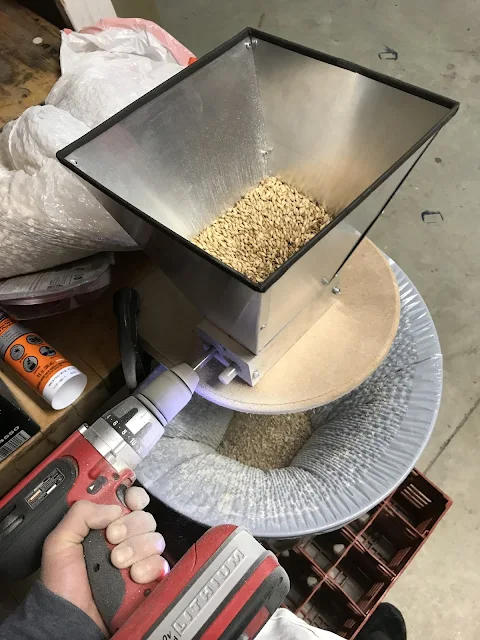
Most brewers simply purchase a bulk sack of 50 lb base grain. It will usually be uncrushed to you need to mill it so having your own grain mill might be part of the deal - buy a good one so it lasts a lifetime of brewing (a handy trick is to connect a powered drill and save yourself some time instead of doing it by hand).Some brewers can use up to 20 base pounds for a brew (remember, brewers like to mix and match their malts to get unique flavors) so a 50-pound sack is good for at least two brews! Specialty grains that are added to the base are usually bought in smaller bagged amounts.
If you have a good relationship with the local craft brewer, they may be able to sling a couple of sacks your way.
Sealable food-grade buckets
 are a great way to store grains so that they remain fresh and they will keep out those cliched eaters of grain, mice, and rats.
If you are a keen malt kit user, then a great way to save money is to buy them from supermarkets rather than from beer stores. I've found a great place near where my mother lives and every time I visit I buy several of their Coopers kits which are often priced 5 or 6 dollars cheaper than my local beer shop.
Extra grain-saving ideas that do not wreck flavour:
- Dial your mash efficiency instead of overbuilding grain bills. A small improvement in consistency saves money batch after batch because you stop throwing “insurance grain” at every recipe.
- Pick one base malt for most beers. Switching base malts constantly is fun, but it usually costs more. Keep one reliable base malt, then use specialty grains for personality.
- Keep specialty grains sane. Specialty malts are often the expensive part per kilo. Many great beers are built with a simple base and one or two specialty touches.
There are also other ways to save money when brewing beer, you may already know these but here we go:
- Instead of using a 'branded' sanitizer, use a generic product such as a laundry soak that contains sodium percarbonate.
- Make your own DIY version of powdered brewery wash
- Instead of buying bottles, save your empties and remove the labels. You can also source glass bottles by raiding your neighbor's recycling bins.... best done under the cover of darkness. Given so many people drink craft beer featuring perfect sized bottles for brewing (500 - 600 mls give or take) there's many a bottle to be scrounged.
Cheaper and less creepy upgrade: ask friends, family, and your workplace to save bottles for you, and use a proper label-removal method so you do not waste hours. If you want the easy road, these are worth a look: remove beer bottle labels easily, best way to get labels off beer, and if you like living dangerously, dishwasher label removal. - If you want to save on buying caps, then you can use swing cap bottles.
- All grain brewers often will use a wort chiller to cool down the brew - handy brewers can make their own, saving a few quid.
- Instead of buying bottles, save your empties and remove the labels. You can also source glass bottles by raiding your neighbor's recycling bins.... best done under the cover of darkness. Given so many people drink craft beer featuring perfect sized bottles for brewing (500 - 600 mls give or take) there's many a bottle to be scrounged.
- Instead of using a wort chiller, you could freeze empty soda bottles with water, say 4 1.5 litre bottles. When it's time to cool the wort, cut the ice from the bottles and drop them into your kettle...
- An old fridge can be turned into a fermentation chamber with the smart use of a temperature controller.
- A great way to find cheap or free second-hand brewing equipment is to keep an eye out on craigslist - it's quite popular but you'll have to be patient and quick! This is quite true for fridges and freezers, some people just want them out of the house quickly so are prepared to let them go at no cost.
- If you want to save on hops, by not using them, you can brew certain styles that don't need them such as Hefeweizen or a low ABV bitter.
- Grow your own hops! Homebrew groups on Facebook are a great way to source rhizome cuttings, usually, all it will cost you is a couple of bottles of brew!
- Don't use so much hops!
- You can find all sorts of handy keg parts on Aliexpress, though if you want quality, you may want to check out sites like Amazon. It's a jungle out there though.
- You can also make your own mash tun out of commonly available items such as water coolers.
- Organized homebrew clubs can often make purchasing arrangements which means cost savings can be passed to you directly, especially so if shipping costs are kept low.
- In winter, you can always use snow to cool wort instead of buying ice for your chiller. Dissolve it in water...
- Make your own beer enhancer with supplies bought cheaply online.
New cheap-brewing ideas that stack up fast:
- Reuse your chiller water. Run the warm outflow into buckets and use it for cleaning gear, soaking labels, or watering the garden. You already paid for the water and the heat.
- Stop “panic replacements.” O-rings, gaskets, and little seals are cheap until you are replacing them weekly because you never lubricate or store them properly. Keep spares, but also keep them clean and dry.
- Build a “house bittering schedule.” If you can make three beers with the same base hop timing, you stop buying three different hop varieties just to hit the same bitterness.
- Use priming sugar like a grown-up. It is cheaper than carbonation drops, and you can target perfect fizz. If you want a calculator that does the numbers cleanly, here is the Priming Sugar Guide + Calculator.
- Split batch flavours. Brew one base wort, then flavour two smaller ferments differently. You get variety without doubling your brew day spend.

Some cautions about cheaping out when buying equipment
There's a long established concept that buying cheap items like tools or shoes will cost you more in the long run than buying a quality implement or boot because you'll need to replace them more often than you would a durable item.The same applies to brewing in many ways. For example, if you have to choose between kettle sizes, buy the bigger one. Sure, it may cost more but if you stick with brewing, then eventually you'll go all grain at scale and you'll have to buy the larger kettle, thus, you've ultimately spent more than you may have wanted.
This is especially so for items like ph testers - go for quality over cheapness every time, especially all when making kombucha.
Extra caution that saves real money: cheap gear that causes leaks, oxidation, or infection is not “cheap,” it is a tax. Spend where failures dump beer: fermenter seals, taps, transfer hoses, and temperature control.
The Art of Water Chemistry in Homebrewing
While much of the focus has been on grains, hops, and yeast, one shouldn't overlook the importance of water chemistry when it comes to brewing beer cost-effectively. After all, water makes up the majority of your brew. Many experienced homebrewers invest in water testing kits or seek information about their local water supply to better understand its mineral content. By adjusting your water's chemical makeup with cost-effective additives like gypsum, calcium chloride, or even simple baking soda, you can significantly improve the efficiency of your brewing process and, ultimately, the taste of your beer.This fine-tuning allows you to better emulate the water profiles of certain beer styles’ places of origin, such as the soft water for brewing a Czech Pilsner or the hard, sulfate-rich water for an English Pale Ale. What's more, getting your water chemistry right can actually make your ingredients go further, saving you money in the long run.
Consider this: a more efficient mash process facilitated by optimal water conditions can extract more fermentable sugars from the same amount of grain. It's an advanced technique, but for those committed to the craft and cost-efficiency, it's an area ripe for exploration.
Cheap water chemistry win: do not chase perfection on day one. Start by learning what your water does to mash pH, then make one small adjustment at a time. If you want a sanity check on cleaning and sanitizing costs too, the “best sanitizer” angle can help you avoid paying boutique prices for the same outcome: what is the best homebrew sanitizer.
Sourcing Local Ingredients for Authenticity and Cost-Saving
Let’s consider an often overlooked avenue for cost-saving and unique flavor—locally sourced ingredients. Homebrewers who take advantage of seasonal and regional ingredients not only save on costs but also add a touch of local flavor to their brews. Imagine a pumpkin ale brewed with pumpkins grown in your own garden or a stout made with local coffee. The opportunities are endless and often, you're contributing to local agriculture and small businesses.Depending on where you live, you might find farmers willing to trade fresh produce for a share of the end product—a win-win scenario that builds community around the art of brewing. Some homebrewers have even been known to forage for wild ingredients, like berries or pine needles, to use in their brewing experiments. While this practice necessitates some knowledge of safe and suitable plants, it offers an intriguing method for incorporating unique, hyper-local flavors into your brews without incurring additional expenses.
Cheap local ingredient pro move: pick one local ingredient per season and build a simple base recipe around it. You get a signature beer, you learn fast, and you stop buying ten exotic additions that never get used up.
A quick “cheap beer, not cheap results” checklist
- Bulk buy the ingredients you actually repeat, not the ingredients you daydream about.
- Make fermentation stable (a controller on an old fridge is often the best value upgrade you can make).
- Reuse yeast intelligently, keep notes, and do not repitch sludge forever without thinking about sanitation and flavour drift.
- Store hops and grain properly, stale ingredients are a hidden cost because they force you to overcompensate.
- Use calculators for carbonation so you stop wasting sugar, caps, and time, and you stop risking gushers.
