How to make Hard Seltzer with a kit

Thursday, January 28, 2021


The trend used to be brewing Kombucha, and while brewing beer will chug along, the drinking rage these days appears to be Hard Seltzer.

Hard, as in Seltzer with alcohol in it.

And some fruit.  

Like 'Wild Cherry' because THAT implies a good time when drinking eh. 

Well, sure, there are lemon-lime fizzy drinks that give you hangovers that have been on the market for years but... the 'Marketing Team' will tell you that seltzers are perfect as low-calorie, low-carbohydrate alternatives to beer, and are thus ideal for consumers seeking out health-conscious drinking habits and an 'activewear lifestyle' in a post Covid Era. 'Post Covid? We're drinking because of Covid, get on the same field here Jim - Ed'.

Aside from marketing spin, seltzer is simply a sparkling drink with added fruit. 

If you are US based, you might know them as 'white claw' or 'lime claws'. White Claw is actually a huge American seltzer brand that has popped out of nowhere over the last few years, and is, as they say, all the rage. 

A good seltzer is easy to make with a seltzer kit, just as easy as a cider kit or ginger beer.
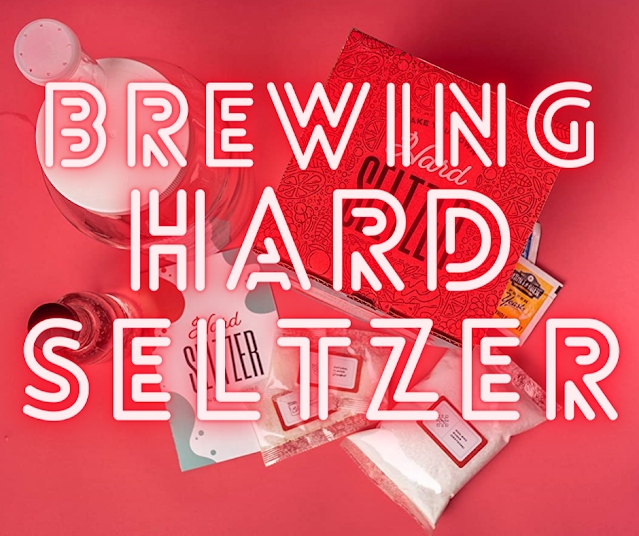
Here's how to make a good drop of it. 

brewing hard seltzer (like white claw)

The Sugar Based Method is a brewing technique and the other is to simply mix water with spirits, add some flavouring and force CO2 through it. It's kind of like making a gin from vodka

Which is nowhere as fun as fermenting your own:

lime mint seltzer


Sugar Based Method Steps for Seltzer with a kit

We trust you've sourced a seltzer kit and have read the instructions  -  take our guidance with the knowledge we've done a bit of brewing and that sometimes manufacturer's instructions are not handy enough for the real world. 

1. Heat 2.5 gallons of water in a large pot. You can do this on the stove or use a gas burner.

2. While heating, add  4 pounds of corn sugar to the kettle and stir until dissolved.

3. Bring this solution to the boil for 10 minutes.

4. Cool the mixture. When the 10 minute boil is finished, cool the sugar solution to approximately 70°F as rapidly as possible. Beer brewers will often use an immersion chiller at this point, or you can place the brew kettle in an ice bath in your sink or wash tub.

5. Sanitize your fermenting equipment, especially the drum (we love to use sodium percarbonate). While the sugar solution cools, sanitize your fermenting equipment – fermenter, lid or stopper, airlock and any stirring spoons or funnels. 

6. Fill primary fermenter with 2 gallons of cold water, then pour in the cooled sugar solution.

7. Add more cold water as needed to bring the volume to 5 gallons which is about 23 litres give or take.

8. If you are really keen, measure specific gravity of the wort with a hydrometer and record it so that you can work out your ABV and also determine when fermentation has concluded.

9. Add your yeast once the temperature of the sugar solution is between 50° and 80°F. This is called pitching yeast - the key part of which is making sure your sugar 'wort' is cold enough to not kill the yeast. This part may sound scary but it's pretty simple. 

10. Seal the fermenter drum tightly, and add your airlock/stopper as needed. 

11. Wait for fermentation to begin! Keep your drum in a warm place and try and keep the temperature as consistent as possible. It's now time for monitoring your batch and to add the nutrients in a timely basis:
  • If you take a reading using your hydrometer, you should see the specific gravity as has dropped steadily since your initial reading, and you may have seen bubbles come through the air-lock.
  • 24 hours after pitching the yeast, dissolve the contents of one yeast nutrient packet in a small amount of water and add directly to the fermenter drum
  • 48 hours after pitching the yeast add the second packet of yeast nutrient directly to the fermenter.
  • 72 hours after pitching the yeast, follow the above procedure and the third packet of yeast nutrient directly to the fermenter.
12. After a week, maybe two, primary fermentation should be complete. You are now ready to bottle your seltzer batch. At this point, you can follow standard beer making techniques to bottle your seltzer

As always, you want clean and sanitized bottles and caps.  You should also consider batch priming with sugar (not forgetting to add the flavours that came with your seltzer kit at this time!).

Using a capper will be quite helpful getting the caps on the beer so make sure you have one ready before you begin this bottling process. Once you have the bottles filled and capped your seltzer, you need to condition it (just like beer!) for one to two weeks and then it should be ready for a taste test. 

When pouring - make sure you seltzer has been cooled for at least a few hours in the fridge (24 is better), slowly pour into a glass - being careful to not stir up the sediment. Add ice and you are away. 

Enjoy your tasty beverage.

brands of seltzer

Why does hard seltzer need yeast nutrients to be added?


When making beer, the malt-based wort provides a nutrient and sugar-rich environment which help yeast fulfil their life’s only mission: fermentation. 

When making hard seltzer, the lack of malt means no nutrients are present that assist yeast cells to strengthen their cell walls and preparation for the process of converting sugar to CO2 and alcohol. 

So, by adding yeast nutrient at appropriate time intervals keeps the yeast alive and productively making your seltzer hard.

How to make hard seltzer clear


Every homebrew loves a clear beer and this is even more so for a seltzer drinking. As like most of these steps, clearing seltzer utilises beer brewing techniques. 

Ready to make your own seltzer? Here's a popular kit that's available for order on Amazon:

Here's a great video tutorial that you can also follow to make your own selzter. Raspberry flavour?


Adding Salt to Beer Brews (& making Gose)

Wednesday, January 20, 2021

A good beer should be worth its salt 

Some beers even have salt added!

I once had a boss who added table salt to granny smith apples (the green, sour ones) as it made them taste even better, I tried it and she was right. By adding a pinch of salt, it tasted better.

It's the same reason bartenders will rim a glass with salt for a margarita.

Salt in beer is associated with the “rediscovered” German beer style, 'gose'.

The 'gose' can be described as a tart, spicy, wheat style where the salt adds a nice, crisp, briny note to contrast the tart flavors.

salted belgian chocolate trout
 

The reality is you can do all kinds of beer styles with the addition of salt.

  • An IP that features toasted coconut and Himalayan pink salt!
  • A salted caramel stout!
  • A saison featuring roasted sunflower seeds and Outer Banks sea salt!


The world is your oyster, even salted Oyster Stouts work!

gose beer salt added

Why do you add salt to a beer?


The intended effect of adding salt is to achieve 'beer balance'. It can act as a counter to a beer's bitterness.

However, when we think of salt, we generally think about table salt which is the kind found in the sea, sodium chloride.

But in the science realm, a salt can be many things and such salts can be added to your beer to change the make up.

There are all kinds of salts that can be added to beer though - gypsum salt being

Ultimately, it’s the trace minerals in the salt that are adding the additional flavor.

Salts can also be used to adjust mash pH, which is a crucial element of making good beer for example brewers can use lactic acid to reduce the pH level).

Brulospohy did an experiment to determine the effect on beer and confirmed it can alter taste and aroma - much to a drinker's satisfaction.

So, you add Sodium Chloride (table salt) to a beer to counter a tart taste and you can add all kinds of 'salts' mainly calcium and magnesium based to your beer to achieve a reduction in pH levels.

Make sense? 

'How to brew' has some great guidance on how to use these kinds of salts in your brews. 

To test if your briny addition has achieved ph balance, you'll need to use a pH meter or colour coded pH test strips (the same as Kombucha brewers use). 

When do I add salt to beer brew?


Make your mineral adjustments to your brewing water before mashing and fermentation i.e can be done during the boil. 

If you are making a pale ale, it may not be the salt you are after - you may be on the path of altering the alkalinity of your beer and may wish to consider adding calcium instead of sodium chloride

How do I add the salt to my wort?


We suggest you place the desired amount to a glass, add just enough water to dissolve it, and then pour in the beer wort. If you don't dissolve it first it can make the beer foam like crazy.

What is a Gose style beer?


Originating hundreds of years ago in Germany's Goslar region, where the mining town’s mineral-rich water gave the local wheat beer a saline edge, give the sour ale with a sharpness that played well with its twangy, lemony profile.

Modern craft brewers look for new twists on old brews have revived the ale, and it has become somewhat popular again.

Because of the use of coriander and salt, the goes style does not comply with the Reinheitsgebot, the famous German Beer Purity laws - however, it gets a pass due to it being a 'regional speciality brew'.

How do 'oxygen absorption' bottle caps work?

Saturday, January 16, 2021

Dedicated brewers will know that beer exposure to oxygen should only occur before fermentation and not after


It's the same with food - oxygen will damage food so that's why many foods are packaged in plastic with 'oxygen scavaging' features - look at potato chips, the bags they come in are filled with nitrogen!

So if you are trying to minimize the amount of oxygen in your bottled beer, mead or wine, you may want to consider using oxygen absorbing caps.

The bottling process can add unwanted oxygen into the beer if you are not careful and too rough with your wort

To remediate this you can do things like being careful with your pouring into the bottle and using a bottling wand.

If you want to do more than that, the bottle caps can help remove the oxygen that sits above the surface of the beer and between the bottle cap.

If you are looking to cellar or age your beer, these caps could help you achieve your goal.

oxygen absorbing bottle caps

Do oxygen bottle caps really work?


Now, let's take a skeptical view of this concept first. 

Do you really need to remove oxygen from the beer bottle?

If you have bottle-conditioned 1000 beers and never had a problem, do you even need to use these crowns?

If you are intending to age beers or extend the hoppiness of your beer, they can certainly give your beer the edge.

The loss of hops aroma can be one of the first signs of oxidation.

In addition, the compounds extracted from hops will can with oxygen, which forms inert compounds that have less aroma and thus a reduction in hop flavor.

Bottle caps which 'scavenge' oxygen from the beer will help prevent or delay this reaction from occurring.

If the food production and beer brewing industries spending millions of dollars doing it, then it surely works.

If you intend to drink your beers quickly, you may not need them.

How do oxygen absorption bottling caps work?


Oxygen-absorbing caps have an internal liner that once activated by water, will absorb oxygen in the headspace of the bottle.

Oxygen absorbing technology is based on oxidation or a combination of one of the following components: iron powder, ascorbic acid, photosensitive polymers, and helpful enzymes (amylase enzyme is really good for brewing actually).

Glucose oxidase is an enzyme that is popular in the elimination of O2 from bottled beer or wine.

The question you need to ask yourself is to what degree do they work and how much of an effect will they have on your beer.

Some brewers think they are only good enough to give worrisome brewers piece of mind!  Given they are only a few cents more per cap, this can make it worth it. 

How do you use oxygen absorbing caps?


These caps activate once you get them wet. 

So once they are capped on, you can invert the beer to wet the inside of the cap and they will stand ready to begin absorbing oxygen. This process starts a day or two after they first get wet. 

>> Side note - if you are adding sugar to your beer bottle at a time, the inversion will make sure no sugar stays in the bottle neck. This is not an issue if you are batch priming the whole wort with sugar)

For clarity, store your brew normally after the inversion.

Many suppliers recommend to not wet or sanitize caps in advance of your bottling session or they will not work correctly. They’ll still close the bottle off from the air like any other cap, but the oxygen-absorbing function will be used up. 

This does mean you can sanitize them just prior to use. 

But that might lead you to ask:

Do I need to sanitize oxygen-absorbing caps?


This author personally no longer sanitizes beer caps. They come out of their bag clean and frankly after 1000s of beers bottled without them, I've never had a problem. 

That said, if it is your standard practice to sanitize caps, then a quick dunk in some Star San is just fine, as long as you do it just prior to bottling and not well in advance. This is because the wetness activates the liner of the cap.

But frankly, we've given up sanitizing beer caps and we've never had any issues - they are kept well clean in bags prior to use.

The choice as the brewer, is always yours!

Check out the range and price on Amazon

↠ Making beer wort

making beer wort

Guide to make really good beer wort for home brewing


When I first started making beer I was totally confused by the word 'wort' that I kept seeing everywhere. 

"Cool your wort quickly!" the internet said. 

Um what?

Well know I know, it's clear that 'beer wort' is the starting point for making beer. It is the amber liquid extracted from malted barley.

In the most basic sense, you can describe the wort as unfermented beer.

Beer makers use the wort as the basis to which start the beer. 

Think of the wort as the base contents of the potion in a witch's cauldron.

As the witch adds 'eye of newt' and other goodies to her potion, the beer maker does the same by adding flavourings and hops to the wort to prepare a solution ready for fermenting. Like a painter needs a well prepared canvas, the wort is the same building block for making great beer. 

beer wort, what is it?

So basically then, the wort is just flat beer. 


It's kind of true....

Kinda 

Like making a cake, if you don't use the correct ingredients in the right proportions your cake fails, a wort needs to be properly prepared.

If you are making beer using a beer kit, then your wort is easily made simply by adding the content of the can to the required volume of hot water.

Boom, you have wort. 

You then add to your beer potion, hops, and sugars such as dextrose or a beer enhancer

If you're boiling your own wort, it's more complicated. You the one who is in charge of making sure you have all the ingredients and that you boil the hops at the right timings - this is crucial if you are trying for a specific kind of bitterness  - so make sure you have the right gas burner to get your wort to a hot temperature

Mashing is required to turn the grains into sugars. The grains a mixed with malt and hot water for an hour or so in a mash tun. When the liquid is ready, it is 'sparged' from the mash and ready to be boiled. 

This is to extract the bittering, flavour and aroma from hops. This is critical if you want your beer to have the characteristics of beer!

The bittering hops are usually boiled in the wort for approximately one hour to one and a half hours. This long boil extracts resins from the hops which provides the bittering.

Near the end of the boil, flavouring hops can be added. Then, if you're fully on your beer brewing game, finishing hops are added last. This part of the wort boil extracts the oils which provide flavour and aroma.


Chill out, man


Once your wort is boiled it's now time to sparge the wort - that means to drain it from the grain mash.

and everything has gone to plan, the wort is chilled very quickly using a wort chiller.

Due to the temperature requirements of yeast, it needs to be at a temperature which will allow it to thrive. If you put your yeast into the extremely hot boiled wort, you will kill the yeast and get flat beer.

It might taste nice but there won't be any alcohol in it either!

Brewers have a tough enough time trying to work out if their beer has fermented properly, so make sure you get that part of your beer brewing right!

Here's some New Zealand classic beer clone wort recipes you might like:


Image credit to Alan Levine via Creative Commons Licence

Powered by Blogger.

Tags

absorption caps abv acetaldehyde acid adjuncts advice about beer brewing aeration aeration kit aging air lock alcohol alcohol poisoning ale ale beer kits alkaline alkaline brewery wash all grain american amylase apera apples attenuation autolysis automatic temperature compensation bacteria baker's yeast baking yeast ball lock ball valve bar keepers friend barley batch prime beer brewing beer capper beer dispenser beer filtration kit system beer gushers beer kit beer kit review beer kits beer lines beer salt beer taps beerstone best brewing equipment biotin bittering BKF black rock bleach blichmann blow off tubing bluelab bohemian pilsner boil in a bag boil over boneface bottle cap bottle caps bottle conditioning bottling bottling beer bottling spigot bourbon brettanomyces brew and review brew day brewing beer guide brewing salts brewing spoon brewing sugar brewing thermostat brewzilla british thermal unit brix brix scale BTU budvar buffer buffer solution burton snatch buyer's guide calcium chloride calcium sulphate calibration calibration probe calibration solution campden tablets capping carbon dioxide carbonation carbonation drops carboy cascade caustic soda cherry wine chinook chlorine christmas chronicle cider clarity cleaning your equipment clear beer clone recipe cloudy beer cold crashing coldbreak conditioning tablets conductivity conical fermenter contamination coopers copper tun corn sugar cornelius corny keg craft beer creamy beer crown cryo hops cubes danstar nottingham demijohn dextrose distilation DIY DME dopplebock draught dry hopping dry malt extract edelmetall brü burner eisbock ekuanot electrode enhancer enzyme equipment ester ethanol experiments in beer making faucet fermcap-s fermentables fermentation fermenter fermentis fermentor final gravity finings five star flat beer floccing foam inhibitor force carbonation french fresh wort pack fridge fruit fusel alchohol garage project gas burners gelatin gift and present ideas gin ginger beer glucose golden ale golden syrup goldings gose grain grain mill green bullet grist guinness gypsum hach hacks hallertauer heat mat heat pad heat wrap home brew honey hop schedule hops hops spider how not to brew beer how to brew that first beer how to brew with a beer kit how to grow hops how to make a hop tea how to wash yeast hydrated layer hydrogen sulfide hydrometer IBU ideas idophor infection inkbird instruments isoamyl acetate jelly beans jockey box john palmer juniper keezer keg cooler keg regulators kegco kegerator kegging kegs kettle kombucha krausen lactic acid lager lagering lauter lion brown liquid malt extract litmus LME lupulin lupulin powder lupuLN2 making beer malic acid malt malt mill maltodextrin mangrove jack's maple syrup mash mash paddle mash tun mccashins mead methanol micro brewing milling milwaukee MW102 mistakes mixing instructions moa mouth feel muntons must nano brewing New Zealand Brewer's Series no rinse nut brown ale oak oak wood chips off flavors original gravity oxygen pacific gem palaeo water pale ale panhead parsnip PBW pear pectine pectolase perlick ph levels ph meter ph pen pH strips ph tester pico brewing pilsner pitching yeast plastic drum poppet valve pot powdered brewing wash ppm precipitated chalk pressure relief valve priming prison hooch probe problem solving propane and propane accessories pruno pump system purity law radler re-using yeast recipe record keeping reddit refractometer reinheitsgebot removing beer labels from bottles review rice hulls riwaka rotten eggs saaz saccharomyces cerevisiae salt sanitization secondary regulator sediment seltzer session beer silicon simple tricks for brewing siphon site glass skunked beer small batch brewing soda soda ash soda stream sodium carbonate sodium carbonate peroxyhydrate sodium hydroxide sodium metasilicate sodium percarbonate sour beer sparge spigot spirals spirits spoon spraymalt star san starch STC-1000 steinlager steralisation sterilisation sterilization sterliization still stoke storage solution stout sucrose sugar supercharger tannins temperature temperature controller therminator thermometer tips for beginners tri-sodium phopsphate tricks and tips trub tubing tui turkey vodka infused gin vorlauf water water testing wet cardboard taste wet hopping weta whirlfloc tablets white claw williamswarn wine winter brewing wood wort wort chiller yeast yeast energizer yeast nutrient yeast rafts yeast starter yeast traps zinc
Back to Top