What’s the Best Tap for Pouring Beer from a Keg?
If you're going to make a kegerator, a jockey box, or a bar-ready keg system, you need a quality beer faucet.
It is the business end of your draft system.
A good faucet will not leak.
The pour feels smooth and you get a clean head every time. You will also feel like a king when the hardware you installed yourself performs like it should.
What to look for in a faucet
- Standard 4 inch shank threading so it fits common tap handles
- Leak resistant design with reliable seals
- Durable build that tolerates cleaning chemicals and heavy use
- Food safe metals, chrome plated brass or stainless steel
- Consistent, smooth pouring action to reduce turbulence and foam
Prices range from basic steel models under fifteen dollars to premium chrome or stainless options around fifty five dollars. Cheap gear can corrode or stick which means you replace it sooner.
Mid range or better is the smart buy for a kegerator you use often.
Top pick many brewers choose:
If you do not want to spend time comparing every spec, the faucet most often bought via this site is the Perlick 630SS tap.
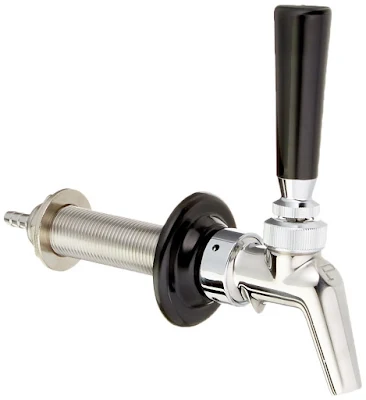
Why the Perlick 630SS stands out
- Forward sealing design keeps beer out of the body of the faucet. That reduces sticking and bacterial growth. It also minimizes air contact, so the first pour of the day starts clean.
- Quick, precise handle action that is easy to modulate for slower or faster pours.
- Thoughtful spout angle helps beer clear the body which reduces drips after a pour.
- Easy disassembly for cleaning and passivation. Stainless components handle caustic and acid cycles well when used as directed.
- Common in commercial coffee and cold brew dispensers due to reliable performance and low maintenance needs.
Real world comments from brewers
Amazing faucet. Never gets stuck or clogged like others. I can keep the keg pressure significantly higher than my old faucet and still get a smooth pour. Highly recommended.
So far I have 2 Perlick 630SS taps and they both work flawlessly. If these keep working as they are then I will be enjoying these for years.
Great taps and a good price. They seal well and do not leak.
A solid mid range option
If you want to spend less, consider the basic G Francis model. It is sturdy and does the job of tapping a keg well. Installation uses the familiar pull out, then down handle motion to couple the keg.
The 4.9 inch length and 4.2 inch width make it easy to handle. Standard 4 inch shank threading fits most handles.
The black knob twists off so you can swap in a custom handle.
Check out the price on Amazon.
For adding or removing faucets, a specially designed wrench helps you tighten to snug without overdoing it. Do not over tighten. Seal integrity comes from the shank seal and washers, not brute force.
Quick comparison
| Model | Material | Seal style | Cleaning ease | Use case |
|---|---|---|---|---|
| Perlick 630SS | Stainless steel | Forward sealing | High | Premium home or pro feel |
| G Francis | Chrome plated brass | Conventional rear seal | Moderate | Budget friendly home setups |
Installation basics for a smooth pour
- Measure and drill a clean hole for the shank at the correct centerline height. Keep it level with the keg or slightly above to help with line balancing.
- Assemble the shank with gaskets and the faucet collar. Tighten until snug. Do not crush gaskets.
- Attach beer line to the shank tailpiece with a proper clamp. Use 3/16 inch ID line for most CO₂ beer service to add line resistance that tames foam.
- Mount the faucet on the shank. Final tighten with a faucet wrench.
- Balance the system. Start at 10 to 12 PSI for most ales at 2 to 4 °C with 5 to 6 feet of 3/16 inch line. Adjust by pour speed and foam until it feels right.
Care and cleaning
- Rinse the faucet after each session. Backflush with warm water. Weekly, circulate cleaner through the line and faucet, then rinse until neutral.
- Break down the faucet periodically. Soak parts per manufacturer guidance. Inspect seals and replace if worn.
- Do not leave sugar laden beer to dry inside the body. Forward sealing designs help, good cleaning habits finish the job.
Troubleshooting quick hits
- Sticking handle clean and lubricate food grade. Forward sealing faucets resist this, but residue can still build over time.
- Foamy pours beer is too warm, pressure too high for the line length, or turbulence at the faucet. Chill further, lengthen line, or lower pressure by a small step.
- Drips after pour check the spout angle and internals for wear. Perlick’s spout geometry reduces retained beer. Replace worn seals if needed.
- Metallic taste verify food safe materials and proper cleaning. Stainless is more inert than cheap plated parts.
The Perlick is a premium champ when it comes to faucets. It is a genuine quality product with a forward seat design that prevents the lever from sticking and a quick handle action that makes it easy to take apart and clean. The spout angle helps keep your homebrew from collecting inside which reduces the chance of beer drips. Many industrial players install these faucets on coffee dispensers due to their performance and low maintenance needs.
Here are the reviews again from brewers who installed these units after buying them on Amazon.
"Amazing faucet! Never gets stuck or clogged like others. I can keep the keg pressure significantly higher than my old faucet and still get a smooth pour. Highly recommended."
"So far I have 2 Perlick 630SS taps and they both work flawlessly. I have not tried any of the generic taps but went straight to these. If these keep working as they are then I will be enjoying these for years to come."
"Great taps, and a good price. They seal quite well, and don't leak at all"
One more note on value
Cheap and cheerful is fine for dinner. For beer, go at least mid range. You will save money in the long run and every pour will remind you why you upgraded.
