Precision in the Cellar: Mastering Lalvin D47
The strain that defines elegance. A deep dive into the fermentation kinetics and sensory profile of the world's premier white wine yeast.
Welcome to the art of winemaking. Whether you’re fermenting cherry, parsnip, or a classic Chardonnay, you already know that ingredient quality shapes everything that follows. Yeast is no exception.
Among the most trusted strains used by home and professional vintners alike, the Lalvin D47 Wine Yeast stands out for its precision and performance. Originally isolated from grapes grown in the Côtes-du-Rhône region of France, this is the strain that helps transform raw juice into something layered, aromatic, and genuinely elegant.
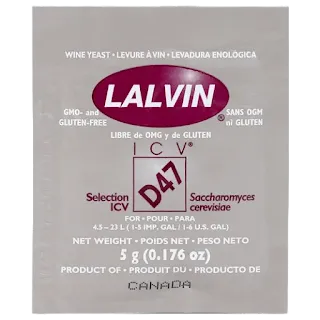
The Gold Standard for Whites & Meads
Clean and Confident Fermentation
Lalvin D47 (Saccharomyces cerevisiae) is renowned for smooth, complete fermentation with minimal fuss. It possesses a moderate lag phase and a regular fermentation rate, which allows it to handle sugar conversion efficiently without "running hot" and stripping away volatile aromas. It consistently produces stable, dry wines without leftover sweetness, provided the nutrient conditions are met.
Its reputation shines in medium- to full-bodied whites (like Chardonnay) and lighter reds such as Pinot Noir, where structure and nuance matter most. Expect wines with crisp balance, controlled acidity, and defined flavor lines that feel intentional rather than accidental.
Aromas that Stay Alive
This yeast is a champion for expressive fruit character. During fermentation, Lalvin D47 exhibits high beta-glucosidase activity. This enzymatic action cleaves the bonds between sugars and aromatic compounds (terpenes), effectively "unlocking" flavors that would otherwise remain dormant and tasteless.
It encourages the release of complex esters that bring out fresh floral and tropical fruit notes, preserving the wine’s natural aroma profile. It is ideal when working with delicate varietals that risk losing their identity during a vigorous fermentation. With this strain, you’ll notice that even subtle notes of pear, apple, citrus, or honey retain their vibrancy through bottling and aging.
The "Danger Zone": Temperature Sensitivity
Master Vintner Warning: While D47 is adaptable, it has one critical weakness. It is highly sensitive to temperatures above 20°C (68°F).
If fermented too warm, D47 is notorious for producing measurable amounts of acetaldehyde (green apple) and fusel alcohols, which taste like harsh solvents or "rocket fuel." To unlock the "silky" texture D47 is famous for, you must maintain a cool, steady environment between 15–20°C (59–68°F). If you cannot control your fermentation temperature during a hot summer, consider a different strain like EC-1118. However, if you have a temperature-controlled chamber, D47 will reward you with unrivaled complexity.
Silky Texture & Sur Lie Aging
Good wine should feel as good as it tastes. Lalvin D47 is a high producer of polysaccharides (complex sugars) during fermentation. These compounds coat the palate, giving the wine a perceived "weight" or creaminess without adding actual sweetness.
This trait makes D47 the premier choice for Sur Lie aging (aging on the lees). When you allow the wine to rest on the yeast sediment for several months (with periodic stirring), the yeast cells break down (autolysis), releasing mannoproteins that further enhance this creamy mouthfeel and stabilize the wine's color. Combined with its ability to promote a gentle malolactic fermentation, D47 creates wines that are round, soft, and harmonious.
Brewer’s Insight: Best Practices
Hydrate Properly
Always rehydrate D47 in chlorine-free water around 35-40°C (95-104°F) for 20 minutes before pitching. This "wakes up" the cell walls, protecting the yeast from osmotic shock when it hits the sugary must.
Feed the Yeast
D47 has a medium nutrient requirement. For low-nitrogen musts (like mead or apple wine), supplement with Fermaid-O or DAP. A stressed yeast will produce sulfur (rotten egg) smells.
Rack Promptly
Unless you are intentionally doing Sur Lie aging with stirring, rack the wine off the gross lees (heavy sediment) within 30 days of fermentation finishing to maintain clarity.
Patience is Key
Wines fermented with D47 benefit immensely from time. A 6-month aging period allows the creamy texture and refined aromatics to fully emerge and integrate.
Final Thoughts
Lalvin D47 Wine Yeast isn’t just another packet on the shelf. It’s a precision tool for crafting wines with character, balance, and longevity. Whether you’re perfecting your first batch or refining your hundredth, this yeast delivers dependability and depth.
Use it for your next home winemaking adventure and experience how a small sachet can elevate the craft into something exceptional.
© 2024 Home Brew Masterclass Series
