Why does my beer smell like rotten eggs?

Monday, July 31, 2023


Who likes the smell of rotten eggs in their beer?

No one.


There was a time last year when I went to bottle my beer.

I'd just sterilized the bottles within an inch of their lives and I was ready to get the precious amber fluid into them.

And with that first pour from the fermenter into the green glass bottle, I got the most rank smell.

Rank.

Smell.

Of.

Rotten Eggs.

It was like I had cracked open a rotten egg and fanned it right up my nose!

It was disgusting like some kind of vile hydrogen sulfide bomb had been let off and the aroma was trying to burn my nostrils.

Why does my beer smell like rotten eggs?

My brew was contaminated and I was gutted


There could have been a couple of reasons why the rotten eggy smell was happening. That rotten egg smell can usually be identified as the gas hydrogen sulfide.

It's probably the most obvious symptom that your beer has become contaminated.

It is the bi-product of the yeast strain or bacteria that have snuck into your brew (did we ever mention you've got to sanitize your equipment?).

The thing about lagers and rotten smells...


All is not necessarily lost, however.

You can fix this problem if the sulfide was produced by the yeast and not bad bacteria.

Lager yeast strains are quite prone to producing sulfide odours.

This is normal.

If you properly condition your bottled beer (the lagering process) by letting it stand for a few weeks, the smell should go away before it's time to drink.

This is why we also recommend that new brewers try an ale or two first to avoid this problem and being disappointed with their foray into brewing.

If you are worried about such smells, then over hopping your beer could help mask them but really, proper conditioning will work wonders. 

The news is not so good if you have a bacterial infection 


When is such news ever good?

In my case, I think it was clear that the beer was infected. The smell was pungent and a wee taste test suggested worse things were on offer.

But even though I was pretty sour, I was a stubborn bugger and bottled anyway on the off chance a bit of time conditioning would let everything sort itself out.

How wrong was I?!

The beer I tasted after two weeks was probably the worst thing I have ever put in my mouth and I once lost a beer drinking game involving a rinsed out kitchen cloth...

I reckon this bad beer would have made me sick if I had drunk a whole glass.

The rest of the brews were opened and tipped out. What was very interesting was there was a massive amount of CO2 / bubbles foam released when each cap was removed. They were giant gushers!

I imagine this was due to the unwanted bacteria continuing to work its own fermenting magic on the malt.

Either way, the lesson here as always is to do your absolute best to ensure that you have clean equipment and that you've done your best to sanitize it, and kept it clean during the beer brewing process.

If you find your beer in this condition before bottling, I'm afraid all you can do is dump the batch.

And then clean the heck of your fermenter and bottles!

This was a brewing lesson I will never forget. I'll be lax in some areas but will always make sure my equipment is clean and sanitized!

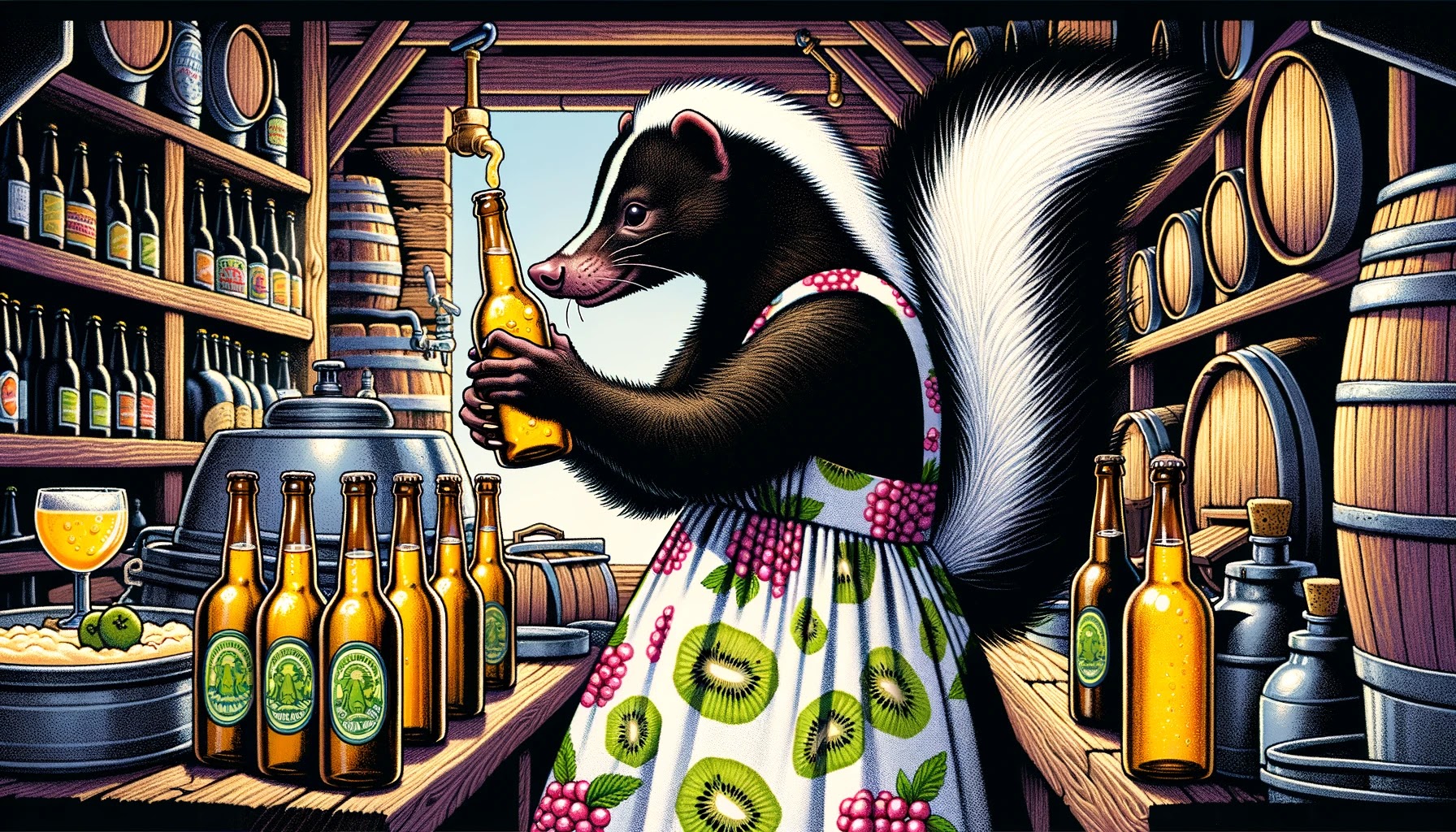
Skunked beer


While we're here talking about ruined beer, let's talk about skunked beer. This is when a chemical reaction happens in the bottled beer due to exposure to sunlight.

So named after the smell a skunk can release, lightstruck beer is caused by the UV radiation in light from the sun and retailer's lights. The so-alpha acids in the beer (which come from hops) are broken down and form a new compound in the beer by joining with any proteins floating around.

This compound stinks!

Brown glass is pretty handy at preventing this from occurring but not so much green bottles or clear glass. So, the trick to avoiding skunked beer is clearly to store your beer in the dark.

In summary:
  • If you are brewing a lager, the smell could be 'normal' and may disappear after the beer has been conditioned
  • It could well be your beer is contaminated by bacteria, in which case nothing will save it. Head to the pub for a self-pitying pint.
  • Lightstruck or skunked beer can happen when the bottled beer is left in sunlight too long.
  • Let your beer condition properly so that the yeast has time to work it's magic properly.

Best no rinse brewing sanitizers for beer and wine brewing

Sunday, July 16, 2023
Every brewer wants to make good beer or wine. There are many ways to achieve a good brew but there is one thing you must do to 'make it so' and that is to sanitize your beer brewing equipment.

If you don't, you run the real risk of infected beer or cider which turns out to be undrinkable.

And where's the fun in that?

So using so-called 'no rinse' brewing sanitisers is an excellent way to keep your beer free of unwanted microorganisms in your beer or wine.

using no rinse sanitizer for brewing

So what is a 'no rinse' brewing sanitizer?


It's a solution that once you have sanitized your brewing equipment and beer bottles, you do not need to rinse off. 

In contrast, if you've used caustic soda or bleach, you will need to rinse your equipment and that just takes precious time that not many brewers have. I have read that some people consider bleach a no-rinse sanitizer but I think it can leave a smell behind which most people would want to remove by rinsing so we can discount it as an option.

So 'no rinse' sanitizer it is then.

So what are the best ones to use? Are they all the same or do some do a better job than others?

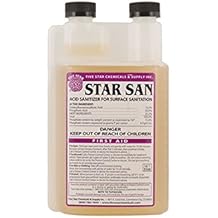
There's a couple of schools of thought on how to go about choosing the best brewing sanitizer. You can go with commercially oriented solutions like Star San and my personal favourite, home-based options from your laundry like sodium percarbonate.

Let's start with Star San as it is a well-known option within the brewing and wine making communities for cleaning and sanitizing brewing equipment.


This proven bug killer that will lay waste to all the microorganisms that could screw up your beer.

It is described by its maker as being a "self-foaming acid sanitizer ideal for brewing, dairy and other food and beverage equipment." The key ingredients of it are a mix of phosphoric acid and dodecylbenzenesulfonic acid.

We say it is a very effective bactericide and fungicide!

So about this no rinsing business? It can be used without rinsing under the proper concentrations. This means following the amount per litre instructions! Star San should be used at a ratio of one ounce to 5 gallons of water.

This means Star San is perfect for sanitizing your empty beer bottles or the carboy.

The beauty of Star San is that it can be used both for the 'spray on' method or for soaking equipment and beer bottles in a tub or bath.

It is probably the most well known and well recommended sanitizing product known for home brewers. Check out the price on Amazon.


Using Iodophor as a no rinse sanitizer


Iodophor is very popular one rinse sanitiser used by many a home brewer. Iodophor is well established in the food and beverage industry as a go-to sanitizer and it works just fine on your brewing gear.

The key active ingredient is iodine, an element that's been found to be wonderfully good at killing germs and preventing contamination.

It's so good, hospitals and doctors use it during surgery to keep the human body free of bugs. Home users often use it with cotton buds for simple first aid hygiene.

So you know it's safe to use on your children, it will work pretty well on your beer kit!

It doesn't work well as a spray solution - it's best to soak your gear with Idophor for at least 10 minutes to sanitize your equipment properly. When it is used at the recommended concentration level with water, it is a no rinse brewing solution.

While Idophor is odourless, tasteless, and easy on your hands it's very colour fast and will stain your clothes so be careful when mixing up your solution!

Why don't you One-Step into my office?


With One Step powdered wash you can lean your beer and wine making equipment quickly and easily with this non-toxic, oxygen-based cleaner. 

Your mixing directions are to use 1 tablespoon with your water and wait 2 minutes of contact time (so it's a bit faster working than iodine based sanitizers). Once your gear has been soaked long enough, it is ready to use.

one step no rinse cleaner

The main ingredient of One Step is 'sodium carbonate peroxyhydrate' aka sodium percarbonate. How it works is quite clever. The powder obviously dissolves when combined with water, which in turn releases the oxygen from the carbonate to form hydrogen peroxide – a chemical which is well known for its sanitizing and disinfectant abilities. '

And that's a point we should make - this product is marketed mainly as a cleaner, however the hydrogen peroxide does double duty as a sanitizer.

This product a one step, no rinse because once hydrogen peroxide completes its work and it breaks down simply into oxygen and water which is safe as houses. Check out the price on Amazon.

best no rinse sanitiser


Speaking of oxygen based cleaners, here's my personal favourite:

Sodium Percarbonate - as a no rinse solution found in your laundry


Go and have a look in your laundry room right now. 

Go on.

I'm waiting...

Did you find a laundry soaker?

Some Oxi-Clean, Tide or Napisan or any other Oxi-named cleaner perhaps? If you did, chances are you've got a cleaner that does double duty as a sanitizer in the form of sodium hydroxide. We've have raved and raved for years about how good sodium percarbonate is as a sanitizer

If it's safe enough to use on your clothes, it's safe enough to use on your beer gear. 

If you are a bit nervous about using laundry powder, you can buy sodium percarbonate in a pure powdered form quite cheaply and easily on Amazon.

So there you have it, a few suggestions on some easy to use, cost effective no rinse sanitizers for brewing. There are plenty of other options out there  - you can use other cleaners like PBW to the same effect. Whichever way you choose to sanitizer your beer, do it well, do it properly and just do it.

If you don't, you will genuinely increase the odds of getting an infected beer, and frankly, if you've had it happen to you, you'll know what a stink and unpleasant experience that is!

Many brewers are trying out Craftmeister's Alkaline Brewery Wash as they consider it performs quite well.

The Ultimate Toasted Marshmallow Stout Recipe

Friday, July 14, 2023

Let's explore a recipe inspired by the results successful homebrewers, incorporating the rich flavors of toasted marshmallows into a robust and flavorful stout. 


This recipie combines the classic characteristics of a stout with the irresistible sweetness of toasted marshmallows. 


So grab your brewing equipment and let's dive into the art of brewing this delectable stout that will surely delight your taste buds. 


From mashing to fermentation and bottling, we will cover each stage to ensure a successful brewing experience. 


Let's get to it. 

Equipment Needed:

  • Large brew pot (at least 5-gallon capacity)
  • Mash tun or large mesh bag for steeping grains
  • Fermenter (glass carboy or plastic bucket)
  • Airlock and stopper
  • Thermometer
  • Hydrometer or refractometer
  • Racking cane or siphoning tube
  • Bottling bucket
  • Bottles with caps
  • Auto-siphon or racking cane with tubing
  • Bottle capper
  • Sanitizing solution or sanitizer tablets

marshmellow stout beer brewing guide

Ingredients for Marshmellow Stout:

- 8 lbs (3.6 kg) Maris Otter malt

- 1 lb (0.45 kg) Chocolate malt

- 1 lb (0.45 kg) Roasted barley

- 1 lb (0.45 kg) Flaked oats

- 1 lb (0.45 kg) Lactose (milk sugar)

- 8 oz (227 g) Crystal malt (60L)

- 4 oz (113 g) Black malt

- 1 oz (28 g) East Kent Goldings hops (bittering)

- 1 oz (28 g) Willamette hops (aroma)

- 8 oz (227 g) Toasted marshmallows (added during fermentation)

- 1 package of yeast suitable for stouts (e.g., Irish Ale yeast)

- 5 oz (141 g) Priming sugar (for bottling)


Step-by-Step Guide to brew the Marshmellow Stout:


1. Sanitization:

   - Thoroughly clean and sanitize all equipment that will come into contact with the beer to prevent contamination.


2. Mashing:

   - Crush the Maris Otter malt, Chocolate malt, Roasted barley, Flaked oats, Crystal malt, and Black malt. Mix them together.

   - Heat 3.5 gallons (13.25 liters) of water in your brew pot to around 160°F (71°C).

   - Add the crushed grains to a mash tun or a large mesh bag and submerge it in the water.

   - Stir the grains to ensure they are evenly wetted and there are no clumps.

   - Maintain the temperature around 150-155°F (66-68°C) for 60 minutes to extract the sugars from the grains.

   - After 60 minutes, slowly lift the bag or drain the mash tun, allowing the liquid (wort) to drain into the brew pot.


3. The Big Boil:

   - Bring the wort to a rolling boil.

   - Add the East Kent Goldings hops and start the 60-minute timer.

   - Throughout the boil, skim off any foam that forms on the surface.

   - During the last 15 minutes of the boil, add the lactose to increase sweetness.

   - In the last 5 minutes, add the Willamette hops for aroma.


4. Cooling and Fermentation:

   - After the boil is complete, cool the wort rapidly to around 68°F (20°C) using a wort chiller or an ice bath.

   - Transfer the cooled wort to a sanitized fermenter, leaving behind any sediment or trub.

   - Pitch the yeast into the fermenter.

   - Seal the fermenter with an airlock to allow carbon dioxide to escape during fermentation while preventing outside air from entering.

   - Place the fermenter in a location with a stable temperature around 68°F (20°C) for about 7-10 days to allow fermentation to complete.


5. Toasted Marshmallow Addition:

   - After primary fermentation is complete, prepare a separate sanitized container.

   - Toast the marshmallows by placing them on a baking sheet under a broiler until browned but not burnt.

   - Add the toasted marshmallows to the sanitized container and pour the fermented beer over them. Gently stir to combine.

   - Cover the container and let it sit for 5-7 days to allow the flavors to infuse.


6. Bottling:

   - Sanitize your bottles, caps, and any additional equipment that will come into contact with the beer.

   - Dissolve the priming sugar in a small amount of boiling water and add it to the sanitized bottling bucket.

   - Using an auto-siphon or racking cane with tubing, transfer the beer from the container to the bottling bucket, being careful not to disturb the settled sediment.

   - Fill the sanitized bottles using a bottling wand or siphoning tube, leaving about half an inch of headspace at the top.

   - Cap the bottles using a bottle capper.

   - Store the bottles in a cool, dark place for at least two weeks to allow carbonation to occur.


After two weeks, your Toasted Marshmallow Stout should be carbonated and ready to enjoy! 

Chill the bottles before opening and pour gently to avoid disturbing any sediment that may have formed during bottle conditioning. With its rich flavors and the added touch of toasted marshmallows, this stout is sure to be a delight. Cheers!

Powered by Blogger.

Tags

absorption caps abv acetaldehyde acid adjuncts advice about beer brewing aeration aeration kit aging air lock alcohol alcohol poisoning ale ale beer kits alkaline alkaline brewery wash all grain american amylase apera apples attenuation autolysis automatic temperature compensation bacteria baker's yeast baking yeast ball lock ball valve bar keepers friend barley batch prime beer brewing beer capper beer dispenser beer filtration kit system beer gushers beer kit beer kit review beer kits beer lines beer salt beer taps beerstone best brewing equipment biotin bittering BKF black rock bleach blichmann blow off tubing bluelab bohemian pilsner boil in a bag boil over boneface bottle cap bottle caps bottle conditioning bottling bottling beer bottling spigot bourbon brettanomyces brew and review brew day brewing beer guide brewing salts brewing spoon brewing sugar brewing thermostat brewzilla british thermal unit brix brix scale BTU budvar buffer buffer solution burton snatch buyer's guide calcium chloride calcium sulphate calibration calibration probe calibration solution campden tablets capping carbon dioxide carbonation carbonation drops carboy cascade caustic soda cherry wine chinook chlorine christmas chronicle cider clarity cleaning your equipment clear beer clone recipe cloudy beer cold crashing coldbreak conditioning tablets conductivity conical fermenter contamination coopers copper tun corn sugar cornelius corny keg craft beer creamy beer crown cryo hops cubes danstar nottingham demijohn dextrose distilation DIY DME dopplebock draught dry hopping dry malt extract edelmetall brü burner eisbock ekuanot electrode enhancer enzyme equipment ester ethanol experiments in beer making faucet fermcap-s fermentables fermentation fermenter fermentis fermentor final gravity finings five star flat beer floccing foam inhibitor force carbonation french fresh wort pack fridge fruit fusel alchohol garage project gas burners gelatin gift and present ideas gin ginger beer glucose golden ale golden syrup goldings gose grain grain mill green bullet grist guinness gypsum hach hacks hallertauer heat mat heat pad heat wrap home brew honey hop schedule hops hops spider how not to brew beer how to brew that first beer how to brew with a beer kit how to grow hops how to make a hop tea how to wash yeast hydrated layer hydrogen sulfide hydrometer IBU ideas idophor infection inkbird instruments isoamyl acetate jelly beans jockey box john palmer juniper keezer keg cooler keg regulators kegco kegerator kegging kegs kettle kombucha krausen lactic acid lager lagering lauter lion brown liquid malt extract litmus LME lupulin lupulin powder lupuLN2 making beer malic acid malt malt mill maltodextrin mangrove jack's maple syrup mash mash paddle mash tun mccashins mead methanol micro brewing milling milwaukee MW102 mistakes mixing instructions moa mouth feel muntons must nano brewing New Zealand Brewer's Series no rinse nut brown ale oak oak wood chips off flavors original gravity oxygen pacific gem palaeo water pale ale panhead parsnip PBW pear pectine pectolase perlick ph levels ph meter ph pen pH strips ph tester pico brewing pilsner pitching yeast plastic drum poppet valve pot powdered brewing wash ppm precipitated chalk pressure relief valve priming prison hooch probe problem solving propane and propane accessories pruno pump system purity law radler re-using yeast recipe record keeping reddit refractometer reinheitsgebot removing beer labels from bottles review rice hulls riwaka rotten eggs saaz saccharomyces cerevisiae salt sanitization secondary regulator sediment seltzer session beer silicon simple tricks for brewing siphon site glass skunked beer small batch brewing soda soda ash soda stream sodium carbonate sodium carbonate peroxyhydrate sodium hydroxide sodium metasilicate sodium percarbonate sour beer sparge spigot spirals spirits spoon spraymalt star san starch STC-1000 steinlager steralisation sterilisation sterilization sterliization still stoke storage solution stout sucrose sugar supercharger tannins temperature temperature controller therminator thermometer tips for beginners tri-sodium phopsphate tricks and tips trub tubing tui turkey vodka infused gin vorlauf water water testing wet cardboard taste wet hopping weta whirlfloc tablets white claw williamswarn wine winter brewing wood wort wort chiller yeast yeast energizer yeast nutrient yeast rafts yeast starter yeast traps zinc
Back to Top