↦ Using calibration buffer solutions to calibrate a pH meter

Friday, February 26, 2021

How to calibrate a pH meter using a buffer solution


While beer making can be a bit of a science, taking the pH level of your beer or water is like some kind of advanced astrophysics lesson because it seems so complicated, what with all the calculations and formula.

Some guy called Nernst apparently had a lot to do with it.

While a pH reading can be complicated because a serious brewer needs to properly calibrate their pH meter - the actual 'maths' involved is straightforward - especially when a proper reading is taken which then means the brewer can make an informed judgment call about how their beer is going.
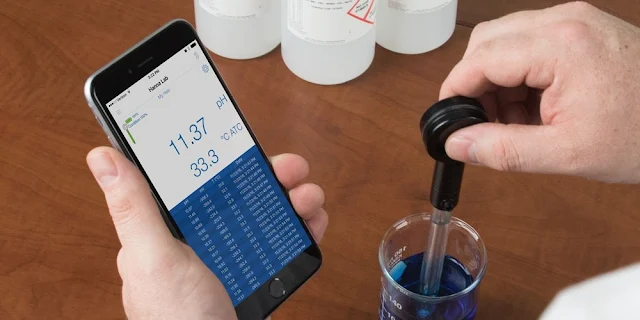
using ph buffer solutions

And to calibrate your meter, you need calibration or buffer solution.

What is a calibration buffer solution?


A calibration or buffer solution is a chemical solution that is used to calibrate a pH meter.

A buffer solution is one that resists changes in pH when small amounts of acid or alkali are mixed with the buffer. Acidic buffer solutions are commonly made from a weak acid and one of its salts - often a sodium salt.

The buffer is used to develop a calibration curve. This a scientific method for determining the concentration of a substance in an unknown sample by comparing the unknown to a set of standard samples of known concentration

In the case of calibrating a pH meter, at least three 'standards' are needed.

Without the standardized pH buffer to calibrate the meter, the results will not be accurate and thus give you the wrong impression.

pH meters tend to 'drift away' from their calibrated settings, it's just their nature due to the way science works!

It is thus very important to calibrate your pH meter often so that the accuracy of your results is maintained.

Devices other than pH meters need calibration with a solution too, such as refractometers and conductivity meters.

What are standard buffer solutions?


The definition is that standard pH calibration solutions should have an accuracy of +/- 0.01 pH at 25°C (77°F) and come usually in seven different pH values from 1.68 to 10.01.

The most popular and commonly used buffers are (4.01, 7.01, and 10.01). Good brands are dyed different colors so they can be easily identified by the brewer and thus used in the correct order.

Standard buffer solutions can be used to calibrate almost any common pH meter so you don't need to fall into the trap of say, for example, using a Hanna brand buffer for a Hanna meter.

The Milwaukee MW102 is pretty popular too! And let's not get started on how big a seller the Apera is!

This does mean that you can look at price and value per mls when deciding what brand to use.

There are two other kinds of calibration standards - Technical and Millesimal

Technical solutions come with a certificate of analysis (COA) which affirms that the solution will absolutely perform to the standard as described.

Millesimal calibration solutions are used in labs where accuracy down to three decimal places is required, think along the lines of municipal drinking water plants, and medical research facilities where readings can be absolutely crucial to good human health outcomes!

Homebrewers generally just stick with standard calibration solutions which they often order online from Amazon.

Why you need to use fresh calibration solution for pH testing


Brewers and testers should always use fresh calibration solution when calibrating one's pH tester electrode. 

All pH measurements are based on the pH calibration solution as a reference point so the solution needs to be pure and not contaminated. 

Think of this like contact lens solution, when it gets old, you don't use it to clean your lenses, you bin it and go with a fresh batch.

It's generally recommended then that opened bottles of buffer solution should be dispensed with after they have been opened for 6 months. 

The higher the buffer's pH ( from  > 7 ), the quicker it will degrade.

If you are calibrating fairly infrequently, you may wish to consider using single-use solution sachets rather than bottled.

using buffer solution to calibrate ph meter

How do I use a calibration solution?


Your meter's pH electrode should ideally be cleaned in purified water before placing it in your pH calibration buffer. This reduces the chance of contaminating the solution

A good practice is to be to use two beakers/containers for each calibration buffer that you will use.

Your method would be to clean the pH electrode with purified water then rinse the probe in one of the beakers with the buffer then place the probe in the second beaker with the buffer.

Repeat this practice for multiple calibration points.

For best results, the user must ensure the pH probe has been cleaned and that it is rinsed with clean water between calibration solutions to reduce contamination of the pH solutions.

Here's a handy video guide on how to use your meter with the buffer:


If your solutions are clear, make sure you mark them out before you begin calibrating! You could leave the bottle or sachet close to the beaker as a reference. 

To obtain a correct pH calibration reading, the unit's accuracy is very dependent on the accuracy and age of the calibration solutions used, and the condition and cleanliness of the pH probe tip. You will get a calibration error if the unit is not properly maintained as per the instruction manual.

Never reuse calibration solution


Once you have calibrated your device and then tested beer wort, you should dispose of the reference calibration solution.

Given it has been exposed to the environment and has had equipment placed in it, there's a fair risk of contamination - so adding that to your original sample can risk ruining all your fluid!

The same applies to reusing the test sample at a later date. 

Just don't chance it.

Check out these common ph testing mistakes for other ways to avoid screwing up. 

Making homemade calibration solutions


While some brewers can try to make their own DIY solutions to save money, the results prove to be homemade buffers that are not accurate or stable. This is a wasted effort as the buffer can be guaranteed to interfere with the accuracy of the test results.

Thus, we don't recommend you try to make your own! Check out the options available on Amazon.

Using pH strips to test beer

Thursday, February 25, 2021

Best pH strips for testing beer


Testing strips.

They are perhaps one of the oldest tricks of the trade that chemists have.

While you're testing for the number of hydrogen ions in a solution with a strip, you can actually pretty much test them for anything.

Salvia, soap, urine, wine, and beer to name a few things. Swimming pools, fish aquariums, hot tubs, and the ever popular kombucha are a few more!

But we want to focus on how you can use pH strips with your brewing.

Let's assume for the moment, you don't have access to a really good battery powered pH meter or you don't want to outlay the cash to buy one. The good news is that pH strips are really cheap as chips to buy.

ph scale for strip reference

So why do you want to use a pH strip for testing beer?


The pH level of your beer (both mash and wort) affects the way your beer turns out in several ways. Enzyme function is affected by an out of whack pH level, the efficiency of your hops can be manipulated and it affects how well your yeast ferments your brew.

So quite important then eh?

So the short version of using strip is the result you are looking for is a measurement of between pH 5.2 and 5.5. This is a general, ballpark, 'rule of thumb' number.

How then does one use a pH strip to test beer?


Fill a beaker or glass with the sample of wort or mash that you are testing. Your vessel must be very clean and free of any contaminants that may affect the test result.

Take a strip from the pack and add it to the solution. It will then change color.

You should then immediately compare this colour change to the colour chart that came with your strips. This chart will indicate the pH of your solution.

Your strips may have a recommended length of time to leave the strip in your solution, we suggest you follow that recommendation!

Are pH strips just litmus paper?


It's a fair question to ask. 

The difference lies in the intent of what one is trying to achieve by using either. 

By using litmus paper one is conducting a 'pass or fail' test that determines if a substance is acidic or basic. 

When one uses a pH strip, one is determining the actual pH value.

pH strips are thus more sensitive than litmus paper as they give you a more quantitative result - that said, it is still only indicative. If you need a precise measurement, then a quality pH meter will serve your needs.

Extra for Experts


If you are fairly petty Scrouge McDuck like kind of character, you can double the number of strips you have by carefully cutting them in half (down the length!) and then use as normal. Or, you can just stock up on Amazon, as they are really quite affordable. 

Do I need to boil a malt extract kit can?

Tuesday, February 23, 2021
boil malt brewing kit

Boiling malt extract kits for better beer - should I?

The short answer is that as far as I can really tell, the main reason to boil a wort extract is so that you can keep boiling the wort so you, extra speciality grains and that you can add your hops and thus boil the hops to the timings of your recipe and thus extract the kind of hops bitterness you are going for.

Read on for the long version and in and outs of doing so.... 

Using a beer kit is kind of like doing an all-grain brew without the mashing and steeping of the grains - that's all be done for you with the kit.

For if brewing is not one massive scientific experiment that's quite fun, what is it?

I've made probably just shy of a hundred malt extra kit brews without boiling the wort. The way I see it is that I'm following a pretty simple cake recipe - I just pack everything together, pitch some hops (dry hopping) and let the fermentation begin. 

I'm a simple man, I make simple beer.

Sometimes I go crazy and add some golden syrup...  

Sure, this is a pretty basic position to achieve the most simplest of brews, however, like a pick-a-path book, there are many options which may yet convince you to boil the extract malt and then have a bit it of a play.

If you want a more nuanced beer, one that hits the right flavour notes, then boiling your malt extract and turning it into a hot wort, might be the way to go for you. 

Here's the why:

Adding hops into the wort (unfermented beer) produce a bitterness that is used to balance out the malt's sweetness and of course also to provide the hoppy fruity flavours and smells & aromas that make beers like unique, brilliant and most of all, a genuine drinking experience

At the most basic level, if you don’t boil hops into a kit beer, you’re just making the beer style indicated on the kit. And that beer could be totally drinkable, and chances are it will be. There's nothing wrong with taking a Coopers lager kit, adding some DME, yeast and you're away.

It's the same as if you don’t boil hops into an all-grain beer, you’re not going to like the result.

But what if like Fleetwood Mac, you want to go your own way?

Some choices in a pick-a-path are better than others right?

This is a grand generalisation but here's an excellent guide, especially for noob beginners:

How to boil a malt kit to make great beer

We're going to assume you are down with the basics of brewing beer

You appreciate that your gear and fermentation device need to be cleaned and sanitized. You've got a big enough kettle drum to do the boil in and you've got a gas burner that has the balls to do the job, because when it comes to boiling wort, heat is neat.

In its most basic form, extract brewing involves dissolving your chosen malt extract in about eight litres of hot water to give you wort. In some cases, you'll need to add sugar or dextrose too (or a beer enhancer), depending on the recipe. 

Bring to the boil, add your favourite hops and continue to boil the wort for as long as your recipe specifies to develop the bitterness. You'll need a vigorous boil but try not to let too much liquid boil off -as three things that you do not want to happen can - your wort wort may darken, the sugars could caramalise, and the hops won't deliver the bitterness you want imparted into you beer. 

Once that's all done, you need to cool the wort as fast as you can.

There's all kinds of ways to do that - from putting the kettle into an ice bath through to using a wort chiller. You then transfer to the fermentation drum, top up to about 23L with cold & clean water, pitch the yeast and then continue with normal practices such as storage at a proper fermentation temperature.

Now that above is the most basic guidance, the timing of adding hops to impart bitterness is a bit like that Roy Orbison song, She's a Mystery To Me... 

For the more curious, here's some handy tips to think about: 

Be wary of over boiling the malt


You must remember to stir the wort as you add the malt extract to avoid scorching it on the bottom of the pot. 

Extract is denser than water, so it will naturally sink to the bottom of the kettle and be exposed to that 60 - 70 centigrade heat you've got going. 

A hot kettle will not take long to caramelize and then burn to a sticky, ashy mess. Keep a close eye in it and stir often, at least until the malt has become one with the water. 

You do not need to add the malt extract in all at once. You could do a half and first, wait 10 minutes and then add, or if you wish to be quite cautious you could add a third, add a third and finish with the last third over a 10 - 14 minute period. 

Here's a handy trick, use a wire coat hanger across the kettle and use as a line to hand the malt kits on:

Image credit: Matt Boucher


From wort to boiling hops for bitterness


Most recipes call for a 60 minute boil with several hop additions along the way.

Some brewers advocate a shorter boil to save time and propane, especially if the recipe only calls for late addition hops or whirlpool hopping. That can work out fine, but it’s best to boil for a minimum of 20 minutes to sanitize the wort and get a decent hot break to clear proteins (especially if doing an all grain brew rather than a kit). 

Here's a quick guide on how to boil a malt kit and hop timings.


In general:

  • hops added at the start of the boil will contribute a lot of bitterness but little flavour
  • hops added with 20 – 30 minutes remaining will add a bit of bitterness and a bit of flavour
  • hops added in the last 0 – 10 minutes of the boil will add quite a bit of flavour but little bitterness

Here's the step by step:

  • Prepare and sanitise all equipment as you would with a kit beer.
  • Bring 6-7 litres of water to the boil in a kettle or pot.
  • Add the malt extract, stirring in immediately and taking care not to allow any to sit on the bottom of the pot and burn as discussed above.
  • Get all of this to a gently rolling boil and add 10 grams of your chosen hops. Start a countdown timer for 20 minutes.
  • With 10 minutes remaining, add 15 grams of extra hops
  • With 5 minutes remaining, add 15 grams of extra hops
  • With 1 minute remaining, add the final 10 grams of hops (stick with it, you're on the road to make the best-bittered beer you ever have!)
  • When the time is up, remove the pot from the heat and cool it as fast as possible. On this small scale, it may be possible to do this by placing in a sink or bath of running cold water or using a wort chiller is probably ideal. 
  • When cooled to 25 – 30°C, pour the beer-to-be into your sanitised fermenter or drum.
  • Stir and splash the cooled wort to expose it to as much air as possible. You're trying to add Oxygen - at this point of the process, it's really helpful. 
  • You can now top-up the fermenter with cold water to around the 23 litre mark, if that's what's recommended on the kit instructions. 
  • Pitch yeast and proceed as you would with a kit beer and then expertly store in a place that's warm.
  • Follow out beer brewing guide if you need any further intel.

Adding grains to the extracted wort


If you a feeling really adventurous, it's time to consider adding some grains to your brewing process. 'Specialty grains' as they are known in the parlance will add different flavors and colourings to your beer. It's really easy to incorporate them into your boil - the simple trick is to steep them in your hot water before you do the steps described just above:

Put your grains in a steeping bag and let it sit in your pot of water at about 70 degrees for half an hour. Then pull out the bag, crack open your malt extract and get brewing.

If you're just getting in to rock and roll, you may wish to be circumspect with your first choice of grains. Some grains, especially the paler malts, generally need to be properly to be mashed to get any decent flavour from them. 

Handy grains to try steeping are black malt, caraamber malt, chocolate malt, and roasted barley.

If you do this, you are well on your way to brewing a beer that's worthy of being entered in your local beer brewing competition!

What is the difference between extract brewing and all grain brewing?


The key difference between all-grain and extract brewing is that an all-malt wort made from grains is almost always more fermentable than an all-malt wort made from extract. 

It's just the way it is due to how extract kits are made. 

The early beer kits of thirty years ago solved this problem by combining the malt extract with sugar — which is completely fermentable — to yield reasonably dry beers, and this is why homebrew was often looked down in the 70s and 80s (and beyond) because brews could be so very dry. Back in those days not every town had a brew shop you could run down to for some enhancer or dry malt extract. 

The increased availability of the sugar known as dextrose over the last 20 years has changed the kit game considerably.  

One way to look at it is that an extract kit has had the maker decided the beer style for you already, whereas, with grains, the world is your oyster. You can experiment or have a go with recipes that brewers have found tried and true. 

Those such recipes are often shared between good keen blokes and lasses on forums. Some 'google fu' may help you out! 

If you're interested in a Steinlager clone....

Review of Hach 9532000 Pocket Pro+ pH tester

Wednesday, February 3, 2021
hach ph tester review
Enthusiastic home brewers know that a beer brew that is properly pH balanced will produce excellent drinking results.

Getting the pH level right is really important for getting the brewing results you want, especially when one invests some much money into gear and ingredients, let alone your time.

That's why many beer makers use the Hach 9532000 Pocket Pro+ pH tester to get the results they need.

The Hach company says that it's Pro+ is engineered to deliver accurate results.

Features:
  • Backed up with built-in performance diagnostics, you never have to guess when to clean or calibrate the sensor. 
  • You also get replaceable batteries for convenient field use, and a large, easy-to-read LCD screen.
  • Automatic Temperature Compensation
  • Instructions are found in the manual, which can be downloaded.
All those specifications are nice and all, but what do brewers who have actually used and tested the Hach meters have to say?

"Hach makes pretty reliable products and the pocket Pro is no exception to that. It is easy to use and pretty hardy, we use them at work and they hold up well. This model does not have the replaceable tip, but they make one if needed. I use this meter at home as well for pool pH checks that are quick and easy. It only comes with a single buffer of 7, so you may want to get a 4 and 10 buffer, to allow a 3 point calibration."

"Works very well, I do recommend calibrating the unit soon as you get it and it will be correct"

"I am very pleased! fast and easy and stable"

"Works great for my home brewing"

What are you waiting for, order the Hach from Amazon.

If you don't think the Hack Pocket Pro is for you, check out our buyer's guide with further ph tester options. The Milwaukee MW102 meter is a hugely popular seller.

If you're new to using a pH meter, check out this guide for mistakes to avoid when checking pH levels. You can also use this device to test water in an aquarium or a hydroponic set up.

Powered by Blogger.

Tags

absorption caps abv acetaldehyde acid adjuncts advice about beer brewing aeration aeration kit aging air lock alcohol alcohol poisoning ale ale beer kits alkaline alkaline brewery wash all grain american amylase apera apples attenuation autolysis automatic temperature compensation bacteria baker's yeast baking yeast ball lock ball valve bar keepers friend barley batch prime beer brewing beer capper beer dispenser beer filtration kit system beer gushers beer kit beer kit review beer kits beer lines beer salt beer taps beerstone best brewing equipment biotin bittering BKF black rock bleach blichmann blow off tubing bluelab bohemian pilsner boil in a bag boil over boneface bottle cap bottle caps bottle conditioning bottling bottling beer bottling spigot bourbon brettanomyces brew and review brew day brewing beer guide brewing salts brewing spoon brewing sugar brewing thermostat brewzilla british thermal unit brix brix scale BTU budvar buffer buffer solution burton snatch buyer's guide calcium chloride calcium sulphate calibration calibration probe calibration solution campden tablets capping carbon dioxide carbonation carbonation drops carboy cascade caustic soda cherry wine chinook chlorine christmas chronicle cider clarity cleaning your equipment clear beer clone recipe cloudy beer cold crashing coldbreak conditioning tablets conductivity conical fermenter contamination coopers copper tun corn sugar cornelius corny keg craft beer creamy beer crown cryo hops cubes danstar nottingham demijohn dextrose distilation DIY DME dopplebock draught dry hopping dry malt extract edelmetall brü burner eisbock ekuanot electrode enhancer enzyme equipment ester ethanol experiments in beer making faucet fermcap-s fermentables fermentation fermenter fermentis fermentor final gravity finings five star flat beer floccing foam inhibitor force carbonation french fresh wort pack fridge fruit fusel alchohol garage project gas burners gelatin gift and present ideas gin ginger beer glucose golden ale golden syrup goldings gose grain grain mill green bullet grist guinness gypsum hach hacks hallertauer heat mat heat pad heat wrap home brew honey hop schedule hops hops spider how not to brew beer how to brew that first beer how to brew with a beer kit how to grow hops how to make a hop tea how to wash yeast hydrated layer hydrogen sulfide hydrometer IBU ideas idophor infection inkbird instruments isoamyl acetate jelly beans jockey box john palmer juniper keezer keg cooler keg regulators kegco kegerator kegging kegs kettle kombucha krausen lactic acid lager lagering lauter lion brown liquid malt extract litmus LME lupulin lupulin powder lupuLN2 making beer malic acid malt malt mill maltodextrin mangrove jack's maple syrup mash mash paddle mash tun mccashins mead methanol micro brewing milling milwaukee MW102 mistakes mixing instructions moa mouth feel muntons must nano brewing New Zealand Brewer's Series no rinse nut brown ale oak oak wood chips off flavors original gravity oxygen pacific gem palaeo water pale ale panhead parsnip PBW pear pectine pectolase perlick ph levels ph meter ph pen pH strips ph tester pico brewing pilsner pitching yeast plastic drum poppet valve pot powdered brewing wash ppm precipitated chalk pressure relief valve priming prison hooch probe problem solving propane and propane accessories pruno pump system purity law radler re-using yeast recipe record keeping reddit refractometer reinheitsgebot removing beer labels from bottles review rice hulls riwaka rotten eggs saaz saccharomyces cerevisiae salt sanitization secondary regulator sediment seltzer session beer silicon simple tricks for brewing siphon site glass skunked beer small batch brewing soda soda ash soda stream sodium carbonate sodium carbonate peroxyhydrate sodium hydroxide sodium metasilicate sodium percarbonate sour beer sparge spigot spirals spirits spoon spraymalt star san starch STC-1000 steinlager steralisation sterilisation sterilization sterliization still stoke storage solution stout sucrose sugar supercharger tannins temperature temperature controller therminator thermometer tips for beginners tri-sodium phopsphate tricks and tips trub tubing tui turkey vodka infused gin vorlauf water water testing wet cardboard taste wet hopping weta whirlfloc tablets white claw williamswarn wine winter brewing wood wort wort chiller yeast yeast energizer yeast nutrient yeast rafts yeast starter yeast traps zinc
Back to Top