But this view misses the bigger picture. As detailed in our guide on Mash Infusion, Strike Water, and Rests, temperature is not just an on/off switch for sugar; it is a texture dial. It is the single most powerful tool you have to engineer the "structure" of your beer.
By manipulating the balance between fermentable sugars and non-fermentable dextrins, you dictate how bitterness hits the tongue, how carbonation feels in the mouth, and whether hop aromatics "pop" aggressively or blend softly into the background. You are not just making wort; you are designing mouthfeel.
The Microscopic Workforce: Scissors vs. Sledgehammers
To understand texture, you have to understand the tools creating it. Inside your mash tun, two primary enzymes are fighting for dominance.They are both breaking down starch, but they do it in radically different ways.
For a deep dive into the biology, you can read Mash Tun 101 to optimize enzyme activity, but here is the architectural breakdown required for recipe design.

Beta Amylase: The Precision Tool (145°F – 150°F)
Beta Amylase works at the lower end of the temperature spectrum. Think of it as a pair of precision scissors. It works from the ends of starch chains, snipping off tiny, uniform sugar molecules (maltose).These sugars are easily digestible by yeast.
When you favor Beta Amylase by mashing low, you create a highly fermentable wort. The yeast eats almost everything, leaving a beer that is dry, lean, and potent.
When you favor Alpha Amylase by mashing high, you create a wort full of complex sugars that survive fermentation. These remain in your glass to provide physical weight and body.
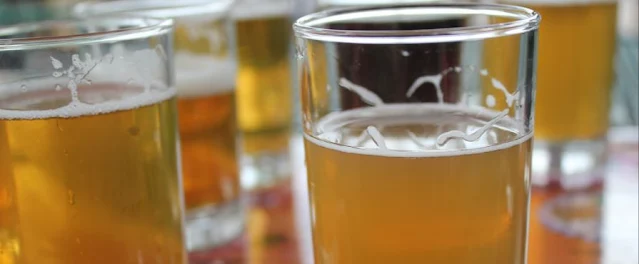
For example, The Hochkurz Method allows you to step mash, resting first at a low temperature for fermentability and then raising the heat for body. This gives you a dry, crisp finish and fantastic head retention - something a single temperature struggles to achieve.
However, chasing these specific textures requires rigorous control. If your thermometer is off, or your equipment loses heat rapidly, you are flying blind. This is why finding the best mash tuns that hold temperature without fluctuation is critical. A drifting temperature means a drifting flavor profile.
Furthermore, enzymes are sensitive creatures. Even if your temperature is perfect, if your water chemistry is off, the texture will suffer. As we discuss in Why Your pH Meter Can Be Right and Your Mash Still Wrong, acidity is the on-switch for these enzymes.
When you favor Beta Amylase by mashing low, you create a highly fermentable wort. The yeast eats almost everything, leaving a beer that is dry, lean, and potent.
Alpha Amylase: The Brute Force (154°F – 160°F)
Alpha Amylase thrives in higher heat. Think of it as a sledgehammer. It attacks starch chains randomly in the middle, breaking them into larger chunks called dextrins. Yeast cannot eat these dextrins.When you favor Alpha Amylase by mashing high, you create a wort full of complex sugars that survive fermentation. These remain in your glass to provide physical weight and body.
Designing the Mouthfeel
The decision to mash at 148°F vs 156°F changes the physical viscosity of the final liquid. This shift fundamentally alters the sensory experience of every other ingredient in your recipe.The "Dry" Profile (148°F / 64°C)
This is the target for West Coast IPAs, Saisons, and Pilsners. Because the liquid is thinner and lacks residual sugar, there is nothing for the hops to hide behind.
- Bitterness: Perceived as sharper and more aggressive. A 40 IBU beer mashed at 148°F will often taste more bitter than a 60 IBU beer mashed at 156°F.
- Carbonation: The CO2 feels "prickly" and active on the tongue because the liquid is less viscous.
- Aromatics: Hop notes are bright, distinct, and fleeting. They "pop" and then vanish.
The "Full" Profile (156°F / 69°C)
This is the domain of Hazy IPAs, Sweet Stouts, and Scotch Ales. The long-chain dextrins coat the tongue and mouth.
- Bitterness: The sugar rounds off the sharp edges of the alpha acids. The bitterness feels softer, rounder, and more integrated.
- Carbonation: The CO2 feels creamy or mousse-like. The bubbles are held in suspension by the thicker liquid, creating a "pillowy" texture.
- Aromatics: Hop flavors feel "juicier" and linger longer on the palate, integrated into the malt backbone.
Advanced Control: Beyond the Compromise
Most homebrew recipes default to a single infusion mash at 152°F (67°C). While safe, this "middle of the road" approach often leads to beer that excels at neither dryness nor body. To truly master texture, you must be willing to choose a side, or employ advanced techniques to get the best of both worlds.For example, The Hochkurz Method allows you to step mash, resting first at a low temperature for fermentability and then raising the heat for body. This gives you a dry, crisp finish and fantastic head retention - something a single temperature struggles to achieve.
However, chasing these specific textures requires rigorous control. If your thermometer is off, or your equipment loses heat rapidly, you are flying blind. This is why finding the best mash tuns that hold temperature without fluctuation is critical. A drifting temperature means a drifting flavor profile.
Furthermore, enzymes are sensitive creatures. Even if your temperature is perfect, if your water chemistry is off, the texture will suffer. As we discuss in Why Your pH Meter Can Be Right and Your Mash Still Wrong, acidity is the on-switch for these enzymes.
A mash with high pH will extract harsh tannins, replacing your desired creamy body with an astringent, tea-bag dryness that no amount of aging will cure.
