PBW stands for Powdered Brewery Wash The brewer’s guide to cleaner fermenters, bottles, kettles, and beer gear
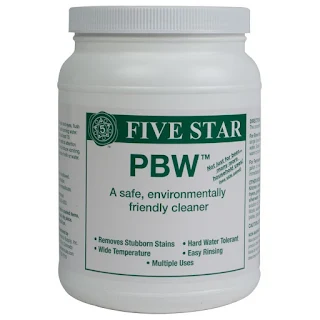
PBW by Five Star is one of those brewing products that earned its reputation the practical way: by cleaning the horrible stuff that brewers actually leave behind.
Dried krausen. Burnt wort. Sticky malt sugars. Hop oils. Yeast sludge. Bottle labels. Fermenter rings. Kettle residue. The tan-brown crust of shame that appears when you told yourself you would clean the brew pot “in a minute” and then somehow it became Tuesday.
PBW stands for Powdered Brewery Wash, and it became popular because it does something homebrewers badly need. It removes brewing soil without requiring furious scrubbing, harsh fumes, or the kind of chemical aggression that makes you wonder whether your fermenter will survive the cleaning session.
It originated in commercial brewing environments, including breweries such as Coors, then found its way into homebrew circles because it solved the same problem at a smaller scale. Beer makes a mess. PBW is built to remove that mess.
The active cleaning power comes from a blend of alkaline builders, oxygen-releasing cleaners, and surfactants. In plain English, that means PBW helps break down organic muck, loosen sticky deposits, lift hop oils, soften dried-on protein, and let water carry the mess away.
Quick answer: PBW is an alkaline oxygen cleaner used to clean brewing equipment before sanitizing. It is excellent for fermenters, bottles, kettles, airlocks, siphons, kegs, and other homebrew gear. Use warm water, give it contact time, rinse thoroughly, then sanitize before the equipment touches cooled wort or finished beer.
Don’t take our word for it. Hunt “PBW review” online or scan brewing forums and you will see pro brewers and hobbyists credit PBW with stripping rock-hard trub, old yeast, wort sugars, and stubborn brewing residue without steel pitting or bleach stink.
Why clean brewing equipment so carefully?
Beer brewing is not just cooking. It is controlled fermentation. That means every surface your wort or beer touches becomes part of the process. A spoon, fermenter, bottle, siphon, tap, or keg post can carry dried malt, hop resin, yeast residue, dust, or microbial film.
Sanitizer is important, but sanitizer works best on clean surfaces. If a fermenter wall is coated in old krausen, sanitizer may not reach the surface underneath. If a bottle has dried yeast stuck inside it, sanitizer may reduce surface microbes but still leave organic material behind. That residue can feed wild yeast, bacteria, or flavor problems in the next batch.
This is where PBW earns its keep. It is a cleaner, not a sanitizer. Its job is to remove the soil first, so your sanitizer can do its job properly afterward.
Brewer’s rule: clean first, sanitize second. PBW removes the gunk. Sanitizer handles the microbes. Skipping either step invites trouble.
How PBW works: the brewing chemistry explained
PBW is popular because it attacks the main types of grime left behind by brewing. Wort and beer residue is not one single kind of dirt. It is a mixture of carbohydrates, proteins, minerals, hop oils, yeast cells, fatty compounds, and sometimes cooked-on deposits from the boil.
That is why a good brewery cleaner needs more than one trick.
Sodium metasilicate: the alkaline muscle
Sodium metasilicate is an alkaline builder. Its job is to raise the pH of the cleaning solution and help break down organic material. In brewing terms, it helps loosen the sticky mix of proteins, malt sugars, fats, and cooked-on residue that clings to fermenters, kettles, tubing, and bottles.
Alkalinity is important because many brewing soils are organic. An alkaline cleaner helps swell, soften, and detach those soils from the surface. This is why PBW can often do in a soak what a tired brewer would otherwise try to do with a brush and a lot of muttering.
Sodium percarbonate: the oxygen cleaner
Sodium percarbonate releases hydrogen peroxide when dissolved in water. That oxygen-releasing action helps break down colored stains, dried organic matter, and some odor-causing residue. It is also why similar oxygen cleaners appear in laundry products.
This does not mean all oxygen cleaners are equal to PBW. Basic sodium percarbonate can help clean brewing gear, but PBW is formulated to work as a brewery cleaner, with alkalinity and surfactant action doing important extra work.
Surfactants: the wetting and lifting agents
Surfactants reduce surface tension, helping the cleaning solution spread across surfaces and penetrate residue. They help lift oils and soil so the cleaning solution can get underneath the mess rather than just bead up on top of it.
This matters with hop oils and sticky brewing films. A fermenter may look clean after a rinse, but if the surface still feels slick or smells like old beer, it is not properly clean.
Mineral control and beerstone
The original PBW reputation includes its ability to help deal with mineral scale and beerstone. This needs a careful brewing distinction.
Beerstone is mostly calcium oxalate, and it can bind tightly to brewing equipment. PBW can help by removing the organic material and films that sit around or over mineral deposits. For light buildup, that may be enough to make the equipment look and feel clean again.
For serious beerstone, an acid cleaner may still be needed after alkaline cleaning. Professional breweries often use alkaline cleaning and acid cleaning as separate steps because organic soils and mineral deposits respond best to different chemistry.
Science made useful: PBW is excellent for organic brewing soils such as dried yeast, wort, proteins, sugars, hop oils, and trub. Heavy beerstone may require an acid cleaner after PBW has removed the organic layer.
The benefits of using PBW are many
PBW is not magic powder, but when used properly it feels close. Its real value is that it makes proper brewery cleaning easier, faster, and more reliable for homebrewers.
- It removes dried-on brewing residue: krausen rings, trub, wort sugars, yeast films, and hop residue loosen during soaking.
- It reduces scrubbing: warm PBW solution can reach awkward corners, bottle interiors, keg parts, and fermenter seams where brushes struggle.
- It works on common brewing materials: stainless steel, glass, many plastics, rubber parts, silicone tubing, and brewery-safe fittings can usually be cleaned with PBW when used sensibly.
- It is useful for bottle label removal: an overnight soak can soften paper labels and adhesive so bottles are easier to reclaim.
- It has less drama than caustic cleaners: it is still a chemical cleaner and should be handled carefully, but it is far more approachable for homebrew use than sodium hydroxide.
- It helps prepare equipment for sanitizing: clean equipment gives sanitizer a proper surface to work on.
One of PBW’s best qualities is that it saves effort at the exact moment most brewers are tempted to cut corners. After a brew day, nobody is spiritually excited about scrubbing a kettle. PBW gives you a better option: soak, wait, rinse, inspect.
How to use PBW properly
PBW works best when you give it the right concentration, warm water, and enough contact time. The cleaner needs time to penetrate the soil and lift it from the surface.
A common homebrew dosing range is 1 to 2 ounces per gallon, depending on how dirty the equipment is. For light cleaning, use the lower end. For neglected fermenters, old bottles, heavy trub, or crusted kettle residue, use the stronger end.
| Cleaning job | Suggested approach | Brewer’s note |
|---|---|---|
| Lightly used fermenter | Use a moderate PBW solution with warm water and soak for 30 to 60 minutes. | Great after prompt cleaning on brew day or bottling day. |
| Dried krausen ring | Use warmer water and a longer soak, often several hours. | Let chemistry do the work before you reach for a brush. |
| Dirty bottles | Soak bottles fully, then rinse until all cleaner and loosened residue are gone. | Inspect each bottle by holding it to light. |
| Burnt or sticky kettle residue | Use a stronger solution, warm water, and a longer soak. | Very stubborn deposits may need a second soak. |
| Kegs and small parts | Disassemble where possible and soak posts, lids, dip tubes, seals, and fittings. | Hidden residue in keg parts can spoil a clean beer. |
A simple PBW cleaning process
- Rinse first: remove loose yeast, trub, hop matter, or sediment with plain water before mixing PBW.
- Mix with warm water: PBW generally works better warm. Around 50 to 70°C is useful for heavy cleaning, but check your equipment’s heat tolerance first.
- Dissolve fully: stir until the powder is dissolved so the solution can contact every surface evenly.
- Soak the equipment: short soaks can handle light residue, while dirty gear may need several hours or overnight.
- Agitate if needed: swirling, recirculating, or gently brushing can speed up difficult cleaning jobs.
- Rinse thoroughly: PBW is a cleaner, and cleaners must be rinsed away before beer or sanitizer touches the surface.
- Inspect before sanitizing: if it looks dirty, feels slick, or smells like old beer, clean it again.
- Sanitize after cleaning: use a brewing sanitizer before contact with cooled wort or finished beer.
Soaking kettles and pots
Neglected trub can bake onto your brew kettle, especially if you have boiled hard, used lots of extract, or walked away after brew day promising yourself you would clean everything later.
PBW is very good here because the residue in a kettle is usually a mix of malt sugars, proteins, hop compounds, and heat-darkened organic material. Warm PBW solution can soften those deposits and let them release from the metal.
For heavy kettle cleaning, fill the kettle above the grime line, mix PBW at the stronger end of the range, and let it soak. Six to eight hours can make an ugly kettle much easier to rinse. For truly cooked-on patches, a second soak and a soft cloth or non-scratch pad may be needed.
Do not attack stainless steel with harsh abrasives. Scratching stainless can create tiny places for residue to cling later. Let the cleaner work, then use gentle mechanical help only where needed.
Cleaning fermenters with PBW
Fermenters are where PBW really earns homebrew loyalty. A fermenter can look like a biological crime scene after primary fermentation. Yeast climbs the wall, krausen dries in rings, and hop debris sticks to surfaces in awkward places.
For plastic fermenters, avoid aggressive scrubbing. Scratches in plastic can shelter microorganisms and make future cleaning harder. PBW lets you soak rather than scrape.
For stainless fermenters, PBW works well because stainless handles warm alkaline cleaning when used correctly. Rinse fully afterward and avoid leaving mixed cleaner sitting in contact with metal far longer than necessary.
Fermenter cleaning checklist
- Rinse out loose yeast and trub immediately after emptying the fermenter.
- Fill with warm PBW solution above the krausen line.
- Soak until the ring softens and wipes away easily.
- Run cleaner through the tap or valve if the fermenter has one.
- Rinse until there is no slippery feel, foam, odor, or visible residue.
- Dry fully before storage, or sanitize promptly before use.
Cleaning bottles and removing labels
PBW is useful for bottle cleaning because it reaches inside the bottle where brushes can be annoying, inconsistent, or too short. It is also handy for removing labels from recycled beer bottles.
Soak bottles in PBW solution, making sure they fill completely and do not trap air pockets. After a few hours, yeast sediment, dried beer residue, and many labels will loosen. Some labels slide off neatly. Others require a scrape, because bottle adhesives vary wildly.
After soaking, inspect bottles carefully. Hold them up to a light. If there is a dried yeast smear, cloudy film, or stubborn ring inside the glass, clean it again. A dirty bottle is a spoiled bottle waiting for beer.
PBW has plenty of uses you might not expect
Because PBW is a strong brewery cleaner, it can be useful beyond the obvious fermenter and bottle jobs.
Left dried krausen and spent yeast in bottles? A few hours in PBW solution can flush out sediment your brush cannot touch.
Forgot to clean that fermenter until the residue hardened like Fort Knox? A full-strength overnight soak followed by a thorough rinse can rescue it without turning the job into a punishment.
Keg posts, dip tubes, poppets, bottle fillers, airlocks, siphons, and bottling wands also benefit from soaking. These are the small pieces brewers often forget, and they are exactly the places where residue hides.
Other household uses
Some brewers also use PBW around the house. It can help clean kitchen appliances, stove tops, oven trays, fridge interiors, dishwasher parts, and washing machines. Apply the solution with care, avoid incompatible materials, and rinse thoroughly.
For a deep dishwasher clean, some users run an empty hot cycle with PBW to lift grease and clear residue. For washing machines, an empty hot cycle can help remove soap scum and stale odors.
That said, PBW is still a cleaner. Test cautiously on household surfaces, avoid delicate finishes, and do not assume every surface wants an alkaline cleaner.
PBW is not a sanitizer
This is the most important distinction in the whole article: PBW is not a sanitizer.
PBW removes soils. It helps clean away the gunk that microbes can live in. It does not replace a brewing sanitizer. After cleaning, switch to a no-rinse acid sanitizer like Star San before your gear touches cooled wort, yeast, or finished beer.
Think of it this way. Cleaning removes the dirt. Sanitizing reduces the microbial risk. You need both.
Do not confuse clean with sanitary. A fermenter can look clean and still need sanitizing before use. PBW prepares the surface. Star San or another suitable brewing sanitizer finishes the job.
Acid sanitizers and Covid-19
Star San is a brewing sanitizer, not a medical disinfectant. Its low-pH phosphoric acid formula is designed for brewing use, especially reducing microbial contamination on clean brewing surfaces.
Campden tablets serve a different purpose in brewing. They are especially useful for neutralizing chlorine and chloramine in brewing water, although they can also be used in stronger concentrations as an old-school equipment sanitizer.
For brewing, stick to PBW for cleaning and Star San for sanitizing. For illness control, healthcare use, or virus disinfection, follow current public health guidance and use products specifically approved for that purpose. Brewing chemicals should not be treated as a substitute for proper medical or household disinfectants.
Can you make a DIY PBW substitute?
Some homebrewers make DIY oxygen cleaner blends because sodium percarbonate products are widely available as laundry boosters. Brands such as Napisan and OxiClean are often discussed in homebrew circles for this reason.
A commonly suggested DIY approach is a mix of oxygen cleaner and an alkaline builder, sometimes described as around 70 percent oxygen cleaner and 30 percent TSP/90 or a similar sodium metasilicate-based cleaner. This can create a cleaner with some PBW-like behavior.
But there is an important caveat. A DIY cleaner is not the same thing as the commercial PBW formula. PBW includes a balanced blend designed for brewery use. A homemade substitute may work well for basic cleaning, but it may behave differently, foam differently, rinse differently, or interact with surfaces differently.
Practical advice: DIY oxygen cleaners can be useful for budget cleaning, especially bottles and basic residue. For expensive gear, kegs, stubborn grime, or confidence before a big brew, PBW is the safer known quantity.
Safety tips for using PBW
PBW is friendlier than caustic brewery cleaners, but it is still a chemical cleaner. Treat it with respect.
- Wear gloves when mixing strong solutions or soaking for long periods.
- Avoid eye contact and use eye protection when handling concentrated cleaner.
- Do not breathe powder dust when measuring or pouring.
- Do not mix PBW with other chemicals unless the manufacturer specifically says it is safe.
- Rinse equipment thoroughly after cleaning.
- Store the powder dry so it does not clump or lose effectiveness.
- Keep it away from children and pets, just like any serious cleaning product.
Pros and cons of PBW
| Pros | Cons |
|---|---|
| Effective cleaning Dissolves and loosens organic brewing residue, dried krausen, wort sugars, hop oils, and yeast films. |
Cost Pricier than generic oxygen cleaners or basic laundry boosters. |
| Useful on many brewing materials Suitable for stainless steel, glass, many plastics, rubber, and common homebrew equipment when used sensibly. |
Rinsing required It must be rinsed away thoroughly before sanitizing or brewing. |
| Reduces scrubbing Soaking does much of the work, especially in bottles, fermenters, and kegs. |
Not a sanitizer You still need Star San or another suitable brewing sanitizer after cleaning. |
| Versatile Cleans fermenters, bottles, kettles, siphons, kegs, fittings, and some household items. |
Needs correct use Temperature, concentration, contact time, and surface compatibility still matter. |
| Less harsh than caustic cleaners A practical homebrew option without commercial brewery caustic handling. |
Safety precautions still apply Gloves and eye protection are recommended, especially for concentrated soaks. |
So what do other users say?
PBW has a strong reputation among homebrewers because the results are easy to see. Dirty fermenters come clean. Bottles lose old residue. Kettles recover from burnt wort. Keg parts stop smelling like the last beer that passed through them.
Amazon reviewers and brewing forum users regularly praise PBW for cutting through protein, wort sugars, dried yeast, and hop oils in one go. The recurring theme is simple: it costs more than generic cleaner, but it saves time, effort, and frustration.
Where to buy PBW
Find PBW on Amazon in multiple sizes, from smaller homebrew tubs to larger quantities for frequent brewers.
If you brew often, buy enough that you are not tempted to ration it into uselessly weak solutions. Under-dosing cleaner is one of those false economies that gives you dirty gear and wasted beer.
